Diversification of iron ore distribution can end conflict: Rating agencies

Existing mining company could have own infrastructure in the form of trucks, jetties, site offices, cranes and other leased equipment and not just the mine resource
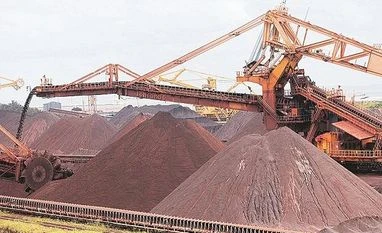
India had produced more than 200 mt of iron ore in 2010-11
Aditi Divekar Mumbai
4 min read Last Updated : Jun 07 2019 | 2:24 AM IST
To address the ongoing tug of war between domestic iron ore merchant miners and the steel industry, rating agencies see the 
diversification of resource distribution as the key solution.

Recently, steel producers asked the government to auction iron ore mining licenses currently held by private miners when they expire in March 2020. The Indian Chamber of Commerce (ICC), Associated Chambers of Commerce and Industry of India (Assocham) and the Chattisgarh Sponge Iron Manufa­cturers’ Association (CSIMA) and Pellet Manufacturers’ Association of India (PMAI) have written to the planning think-tank NITI Aayog, lobbying for mine auctions.

Separately, Federation of Indian Mineral Industries (Fimi) has appealed to Niti Aayog to extend the lease validity of merchant mines till 2030. This has led to the ongoing tug of war between the two sections of the sector.

“The idea is to have a free flow of raw material in the domestic market along with cost competitiveness which will percolate to the cost of production of steel and then to overall economic inflation. For this reason, auctioning should be a mix of captive as well as the non-captive usage,” explained Mahaveer Jain, associate director — Corporates, India Ratings & Research.

Mining leases totaling around 80-85 million tonne iron ore are to expire in March 2020. Of this, about 65 million tonne ore is in Odisha alone, said industry officials. Moreover, a majority of these mines are with private merchant miners such as Ahuja, Rungta Mines, and KJS Ahluwalia Group among others.

These private merchant miners supply ore to induction furnaces and electric arc furnaces units largely situated in the east part of the country.

There should be a demarcation in terms of which section of the industry (merchant or captive miner) should bid for what kind of mine when its opened for auctioning, said officials.

“A lot of merchant mines have allied/leased infrastructure in place at the mines already apart from the piled inventory. This would add an element of uncertainty for any new bidder,” said Hetal Gandhi, director at CRISIL Research.

Existing mining company could have own infrastructure in the form of trucks, jetties, site offices, cranes and other leased equipment and not just the mine resource.

Moreover, if mines for auctioning are not demarcated, captive players will easily have an upper hand over private merchant miners since the latter does not have the financial strength to compete for the former, said agencies.

“If auctioning is kept open to captive steelmakers as well, bid premiums will go way high as witnessed in last year auctions for captive usage. This can put the merchant miners at a disadvantage,” explained Gandhi.

India is amongst the top producers of iron ore globally, with total production growing to around 220 million tonnes in FY19, growth of 9.5 percent from last year, Care Ratings said in its report. With some iron ore mines licenses expiring in March 2020, miners are expected to ramp up production and build inventories. Production growth in FY20 is expected to be in line with FY19, it said.

“Those miners who are doing value addition can go for auctioning of mines and only then it would become captive. But keeping auctioning completely open would mean for smaller players even of steel industry may not be viable since mining is a different ball game compared to metal production,” explained Jain of India Ratings.

So even within the captive miner's category, there is a need to look at their financial flexibility else it would lead to other issues from the financial point of view, said agencies.

Overall agencies were of the view that auctioning of mines should certainly take place under the MMDR Act as the act promotes competition, transparency and ensures payouts to the government in an organized manner.

In the captive usage category, Sajjan Jindal-led JSW Steel could be a big participant as it does not have a strong backward integration along with Delhi-based Jindal Steel & Power which buys nearly 70 percent of its ore from the open market even today.  

FY19 saw a surge in iron ore imports. India imported 12.6 million tonnes during Apr-Feb, a sharp growth of 72 percent compared with the corresponding period last year, said Care Ratings.

One subscription. Two world-class reads.

Already subscribed? Log in

Subscribe to read the full story →
*Subscribe to Business Standard digital and get complimentary access to The New York Times

Smart Quarterly

₹900

3 Months

₹300/Month

SAVE 25%

Smart Essential

₹2,700

1 Year

₹225/Month

SAVE 46%
*Complimentary New York Times access for the 2nd year will be given after 12 months

Super Saver

₹3,900

2 Years

₹162/Month

Subscribe

Renews automatically, cancel anytime

Here’s what’s included in our digital subscription plans

Exclusive premium stories online

  • Over 30 premium stories daily, handpicked by our editors

Complimentary Access to The New York Times

  • News, Games, Cooking, Audio, Wirecutter & The Athletic

Business Standard Epaper

  • Digital replica of our daily newspaper — with options to read, save, and share

Curated Newsletters

  • Insights on markets, finance, politics, tech, and more delivered to your inbox

Market Analysis & Investment Insights

  • In-depth market analysis & insights with access to The Smart Investor

Archives

  • Repository of articles and publications dating back to 1997

Ad-free Reading

  • Uninterrupted reading experience with no advertisements

Seamless Access Across All Devices

  • Access Business Standard across devices — mobile, tablet, or PC, via web or app

Next Story



