Govt will be able to push disinvestment through: Indraneil Borkakoty
Interview with Managing director, IDFC Investment Banking
Samie Modak Mumbai The amount of new paper supply helps keep secondary market valuations in check, says
Indraneil Borkakoty, managing director of IDFC Investment Banking. Most bankers are readying companies to launch initial public offerings (IPOs), which will start entering the market after September, he tells Samie Modak. Excerpts:
Is it busy time again for investment bankers? Things have improved greatly from where we were. Companies have once again started engaging on fund-raising; there is interest among investors as well. So, trends are positive. We expect a good amount of capital-raising activity both in the private sector and the government.
There have been a slew of institutional placements, but IPOs haven't started yet... In case of qualified institutional placements (QIPs), you don’t need too many approvals, compared with an IPO, where you have to prepare a document and get it cleared. IPO preparation is a four- to six-month process. In the past two-three years, there has been so much activity in the equity market that people have stopped working on IPOs. Now that the markets have opened up, you will find more IPOs happening. But this will happen with a lag. You will start seeing IPOs hitting the market after September. Next year, you will find a lot more IPOs than QIPs.
Will the market be able to absorb the new paper supply? The new paper supply will be good for the market. Otherwise, liquidity that is coming will only drive secondary markets up. It is always good to have a good supply of primary paper or offer for sales in the market. It provides an opportunity to investors to look at new stocks, which are looking to raise growth capital. Investors now see India as a short-term, medium-term and long-term play. All three seem to fall into place. Short-term play to a large extent has played out as we saw a rally before and after the elections.
How is the mandate pipeline looking like? Mandates such as QIPs and blocks are more timing-dependent than something which has been in the works. For that, there cannot be a clearly-defined pipeline as they happen over a shorter period of time. All investment banks are in the midst of making their IPO pipeline. Pipelines are expanding across investment banking space. Everyone is pretty busy.
The disinvestment target for FY15 is quite steep. Do you think it’s manageable? Domestic markets are expected to hold out. One cannot predict what will happen at the global level. There are a number of geopolitical situations to be considered. Having said that, from an India-only perspective, the trend is clearly upwards. Obviously, there will be some corrections and bouts of uncertainty. Volatility is here to stay at least for the next year or two. In light of that, I expect the market to hold up and I don’t see a challenge in government being able to push through the disinvestment programme.
Valuations of PSU stocks have run up. Given this, do you think disinvestment will be a challenge? In spite of a run-up in the market, deals are still happening. It is a function of liquidity, timing, and belief in the fundamental story. I don’t think it would be right to compare prices today with prices a year or two ago. Back then, there was a huge environment of uncertainty. Now things are looking great in terms of growth and stronger macro-economic situations. I don’t think valuations are going to be a challenge.
Will IDFC participate in the disinvestment process? Will the ‘zero fee’ trend continue? We will continue to bid for government transactions. That is one of our important areas of business at least from an investment banking perspective. Zero fee is something which one has to address on a case-to-case basis. It is something an investment bank has to take a call on depending on its strategy.
How much do think can India Inc raise through IPOs in the next six months to a year? It is difficult to say. We are still in early stages. It is all work in progress. Unless you see those filings happen, it is difficult to put a number. But we will see IPO activity across sectors.
Are there fears of too many issuances getting bunched up at the later part of the financial year? It spreads itself out. In 2009-10, there were concerns of bunching out. But deals went through successfully. When you have large amount of capital chasing opportunities, it doesn’t really matter. With a fair amount of liquidity and demand, from both long-only investors and hedge funds, I don’t see too much of a concern from a bunching out perspective.
Do you think IPOs will happen once again at steep valuations like it was during the last bull market? Investors may not have made money as people would have expected to in IPOs. But it is important to look at wider trends in the market. People raised money towards the end of the bull market. So when the bear market sets in, everything collapses. It is important to understand the timing of the raise and the macro-economic situation rather than saying IPOs were overpriced.
Having said that, what stage are we in right now? I think we are in the start of a bull run.

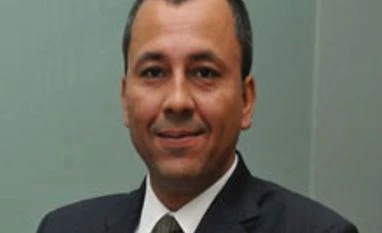 "Govt will be able to push disinvestment through: Indraneil Borkakoty")


 Connect with us on WhatsApp