Heritage Foods to Prabhat, dairy firms' profit saw a jump in June quarter

A study by India Ratings & Research has estimated a 5.9% compounded annual growth rate between 2013 and 2018 in milk production, to 176.35 mt
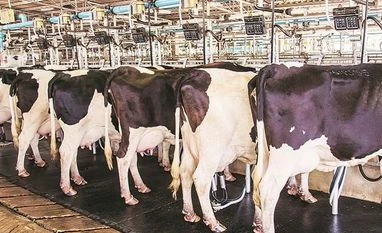
cow, milk, dairy
Dilip Kumar Jha Mumbai
Last Updated : Aug 25 2018 | 12:51 AM IST
The net profit at dairy companies soared during the April-June quarter, the first one of 2018-19, due to lower cost of production. Led by lower input prices.

Bulk milk producer Prabhat Dairy, for example, reported a 90 per cent increase to Rs 111 million from the same quarter last year, even as revenue grew only 7.3 per cent to Rs 3.86 billion. It had raised milk procurement by 16 per cent to an average of 1.08 million litres a day, with a 24 per cent decline in the price it paid sellers, at Rs 20.6 a litre.

Hyderabad-based Heritage Foods recorded a 14 per cent jump in consolidated net profit at Rs 213 million. Revenue from operations rose only four per cent, to Rs 6.4 billion.

This sharp rise in profit for the quarter came as milk famers suffered. The prices they got averaged Rs 17-18 a litre across the southern and western states. These have risen, since the government of Maharashtra announced a minimum selling price last month of Rs 25 a litre. This increase might squeeze the margins of dairy companies.


“The improved profitability of dairy companies for April-June can be attributed only to low milk prices. Being a farmers' co-operative, we pay Rs 8-10 a litre higher than corporate dairies,” said R S Sodhi, managing director of the Gujarat Co-operative Milk Marketing Federation, which sells the Amul brand of products.

The governments of Andhra Pradesh and Tamil Nadu offer a subsidy of up to Rs 5 a litre for milk farmers. Maharashtra announced a similar subsidy in July but only for milk procured and used in value-added segments. Dairy companies, therefore, would not be able to realise the benefit of this subsidy for the portion of milk used for retailing.

“Prabhat Dairy derives around 25 per cent of revenue from fresh milk, which doesn't qualify for a subsidy. However, the company does not see any margin pressure, as trade discounts on fresh milk are huge and the impact can be offset by decreasing this. The company management estimates around Rs 100 million increase in working capital due to the lag in receiving subsidy from the government,” said Shradha Sheth, an analyst with Edelweiss Securities.
Parag Milk Foods reported a 169 per cent jump in its net profit at Rs 283 million for the June quarter over the comparable period last year. Consolidated revenue at Rs 5.5 billion rose 33 per cent. 

Apart from lower milk prices, the price of cheese and skimmed milk powder continued to remain subdued in international markets, which dampened the outlook for export.

A study by India Ratings & Research has estimated a 5.9 per cent compounded annual growth rate between 2013 and 2018 in milk production, to 176.35 million tonnes (mt). This year, 2018-19, is epected to see a rise to a record 186 mt, leading to a higher marketable surplus, the study forecasts.  

Dilip Kumar Jha

One subscription. Two world-class reads.

Already subscribed? Log in

Subscribe to read the full story →
*Subscribe to Business Standard digital and get complimentary access to The New York Times

Smart Quarterly

₹900

3 Months

₹300/Month

SAVE 25%

Smart Essential

₹2,700

1 Year

₹225/Month

SAVE 46%
*Complimentary New York Times access for the 2nd year will be given after 12 months

Super Saver

₹3,900

2 Years

₹162/Month

Subscribe

Renews automatically, cancel anytime

Here’s what’s included in our digital subscription plans

Exclusive premium stories online

  • Over 30 premium stories daily, handpicked by our editors

Complimentary Access to The New York Times

  • News, Games, Cooking, Audio, Wirecutter & The Athletic

Business Standard Epaper

  • Digital replica of our daily newspaper — with options to read, save, and share

Curated Newsletters

  • Insights on markets, finance, politics, tech, and more delivered to your inbox

Market Analysis & Investment Insights

  • In-depth market analysis & insights with access to The Smart Investor

Archives

  • Repository of articles and publications dating back to 1997

Ad-free Reading

  • Uninterrupted reading experience with no advertisements

Seamless Access Across All Devices

  • Access Business Standard across devices — mobile, tablet, or PC, via web or app

Next Story


