Equities have potential to deliver superior returns: Sukumar Rajah
Interview with MD & chief investment officer (Asian equity and local asset management), Franklin Templeton
Puneet Wadhwa With the poll bugle being sounded, market participants are hoping a stable government will be formed at the Centre.
Sukumar Rajah, managing director and chief investment officer-Asian equity, local asset management, Franklin Templeton, tells Puneet Wadhwa, the best strategy to adopt is bottom-up and sector-agnostic investing. Highly fragmented poll results will weigh on decision-making and market sentiment, he adds. Edited excerpts:
Recently, developed markets (DMs) have generated a lot of investor interest, compared to emerging markets (EMs). Is it time we write-off EMs? If not, which EMs hold promise and why? DM equities have been outperforming their EM counterparts for the last year or so, due to investor concern over EM growth prospects and the impact of the US Federal Reserve tapering. Major EM economies have been witnessing a slowdown due to various factors, but long-term fundamentals remain strong.
We remain positive on the medium-to-long-term prospects, given long-term fundamentals such as a high savings rate, demographics and relatively lower leverage. While there are expectations of further slowdown, some countries could surprise and this provides good long-term buying opportunities
Do you think things will turn worse for the global economy and markets? At this stage, the global economy is on track to marginal improvement this year, helped by the strength in the DM world (led by the US). Inflows into equity funds have improved amid the concern about rising rates in the developed world.
For the global economy, the next few years are critical, as countries work through the imbalances and lay the groundwork for the next phase of growth. From a fundamental perspective, EM countries still remain well placed, relative to the developed world. We believe these countries will continue to grow at a higher pace than developed markets in the coming years and decades.
Markets, especially Indian ones, are optimistic about the outcome of the general elections. Is this justified? While there is lot of focus on the elections, we believe there is a broad-based consensus on most requisite reforms. Therefore, irrespective of the nature of the ruling parties (coalition), we should see a concerted policy focus. However, a highly fragmented result will weigh on decision-making and market sentiment. As with all business cycles, we expect India to turn around from the lows; we could witness a cyclical improvement in margins.
What was your asset-allocation strategy through the past year and do you see this changing in the next 12-18 months? Which geographies and asset classes could see more allocation? In a growing economy such as India, equities have the potential to deliver superior risk-adjusted returns in the long term. Given the volatility in recent years, clearly, there is a case for increasing exposure to foreign funds and using the systematic route to ride over market cycles.
How did the recent earnings season for Indian companies pan out? What were the key takeaways, positives and negatives? The latest earnings season was largely in line with expectations; the growth in earnings appears to be bottoming out on the back of a strong performance by export-oriented sectors. As companies de-lever and consolidate, and the macro situation improves, earnings growth could improve. The deleveraging trend augurs well for the asset quality of banks.
The consolidation is also likely to provide a fillip to earnings growth. We expect margins to expand once interest rates normalise and positive operating leverage kicks in. Capacity addition has been quite low; it could improve quite fast.
Is it time to step into sectors such as metals and banks? What about policy-related sectors such as oil & gas and infrastructure? We strongly believe in a market such as India, the best strategy to adopt is bottom-up and sector-agnostic investing. We are finding opportunities in some beaten-down sectors that are likely to benefit from an eventual turnaround in the economy. However, the focus needs to be on individual companies (we remain unconvinced about the prospects of public sector banks) and their management quality.
What’s your stand on fast-moving consumer goods, information technology (IT) and health care/ pharmaceutical sectors? Does the road ahead for these make these must-haves in a portfolio? While we are positive about the long-term potential of consumer goods and health care companies, current valuations are quite stretched. IT companies have benefited from the currency depreciation and the improved growth environment in the developed world. Indian IT companies are also benefiting from rise in market share in Europe. Their focus on ‘horizon three services (social, mobile, analytics and cloud)’ could help them in the medium term.

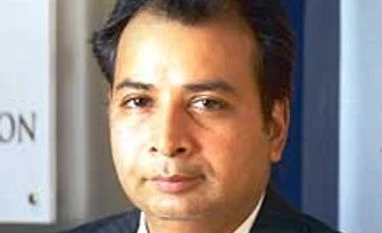 "Equities have potential to deliver superior returns: Sukumar Rajah")


 Connect with us on WhatsApp