India nears $2-trillion market capitalisation club as Sensex crosses 30k

BSE benchmark hits 30,000, m-cap just 3% shy of milestone; only 8 other markets are worth more
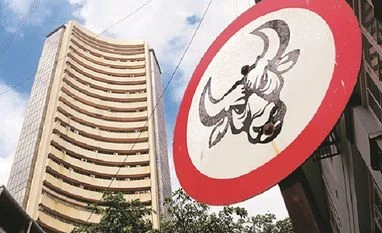
Sensex
Sensex
Pavan Burugula Mumbai
Last Updated : Apr 27 2017 | 12:21 AM IST
With the Sensex climbing past 30,000, India’s market capitalisation (m-cap) is inching to the $2-trillion mark; at $1.94 trillion in dollar terms, it's less than three per cent shy of this. Only eight other countries have a higher m-cap. The benchmark Sensex on the BSE exchange has gained 20 per cent in dollar terms so far in 2017, making it the best-performing index among global peers. In local currency terms, the Sensex is up 13.2 per cent. India’s m-cap is now 82 per cent of the size of the 2016-17 gross domestic product.

This performance, with a strengthening rupee, has driven the markets, experts said. The rupee has appreciated six per cent against the dollar during 2017, raising the value of Indian markets and the return for foreign investors in constant currency terms.

India’s share in global m-cap has also touched a seven-year high. India currently accounts for 2.7 per cent of global m-cap, the highest since October 2011. However, back then, Indian’s m-cap was only $1.2 trillion.

This rise of India’s share in global equities would increase the country's weightage in various exchange traded funds. This would help the country get more of foreign fund flow. However, the amount received would also depend on the free-float market capitalisation, as major funds globally use this as a benchmark for calculating weightage. The free-float m-cap of BSE 500 companies is currently 46 per cent; all other major emerging market peers have a higher one, and get more weightage. For instance, the free-float m-cap of Brazil is 89 per cent; of Hong Kong, 66 per cent.

Free-float market cap is the proportion of shares readily available for trade. Free float excludes promoters’ holding, government holding, strategic holding and other locked-in shares. Free float is a key factor for institutional participation in a market because it determines the liquidity of a market.  

With robust macro-economic indicators and a strong flow of funds from both domestic and foreign institutions, the current buoyancy in markets is expected to continue, analysts say. However, revival in corporate earnings would be a key domestic trigger that would determine the market movement. On the global front, political developments in Europe along with the geopolitical situation in Syria would be key factors from a global front.

One subscription. Two world-class reads.

Already subscribed? Log in

Subscribe to read the full story →
*Subscribe to Business Standard digital and get complimentary access to The New York Times

Smart Quarterly

₹900

3 Months

₹300/Month

SAVE 25%

Smart Essential

₹2,700

1 Year

₹225/Month

SAVE 46%
*Complimentary New York Times access for the 2nd year will be given after 12 months

Super Saver

₹3,900

2 Years

₹162/Month

Subscribe

Renews automatically, cancel anytime

Here’s what’s included in our digital subscription plans

Exclusive premium stories online

  • Over 30 premium stories daily, handpicked by our editors

Complimentary Access to The New York Times

  • News, Games, Cooking, Audio, Wirecutter & The Athletic

Business Standard Epaper

  • Digital replica of our daily newspaper — with options to read, save, and share

Curated Newsletters

  • Insights on markets, finance, politics, tech, and more delivered to your inbox

Market Analysis & Investment Insights

  • In-depth market analysis & insights with access to The Smart Investor

Archives

  • Repository of articles and publications dating back to 1997

Ad-free Reading

  • Uninterrupted reading experience with no advertisements

Seamless Access Across All Devices

  • Access Business Standard across devices — mobile, tablet, or PC, via web or app

Next Story



