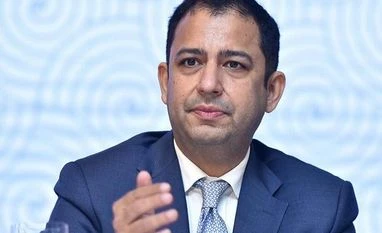
Mutual fund (MF) house Nippon Life India Asset Management (Nippon MF) has faced opposition from institutional investors on a resolution pertaining to the remuneration of CEO and Executive Director Sundeep Sikka.
About 83 per cent, or 28.6 million of the 34.47 million votes polled by the public institution opted “against” the special resolution, disclosures made by the company last week to the BSE showed. The resolution was still passed as it obtained an overall 94.2 per cent “in favour” votes, given the higher promoter holding in the company.
The resolution was floated as Sikka’s remuneration for the financial year 2020-21 is likely to exceed the maximum permissible under the Companies Act and Sebi’s Listing Regulations.
Under the norms, a company is required to obtain approval of its shareholders by way of a special resolution if the annual remuneration payable to the executive director — who is a member of the promoter group — exceeds Rs 5 crore, or 2.5 per cent, of the net profit of the listed entity, whichever is higher.
In 2019-20, the company had reported a net profit of Rs 412 crore, down from Rs 475 crore in the previous financial year. In 2019-20, Sikka had got a total remuneration of Rs 7 crore and Rs 10.56 crore in the preceding year, according to a public notice by the company.
The total remuneration for 2020-21 couldn’t be ascertained.
The opposition from public shareholders comes despite Nippon MF’s explanation that the ceiling was being hit not due to any hike in salary but on account of the exercise of stock options granted since 2017.
“The remuneration of Mr Sikka’s for the financial year 2020-21 is well within the limits prescribed under the Act. However, on account of vested stock options…during the remaining financial year and up till April 21, 2021…his total remuneration is like to exceed the limits prescribed under Section 197 of the Act, on the basis of the current profit estimates,” the company had said in a notice to shareholders in March.
Major institutional shareholders in Nippon MF include LIC (2.59 per cent stake), IndusInd Bank (3.32 per cent), HDFC MF (1.59 per cent), and Baron Emerging Markets (1.85 per cent), according to the March 2021 quarter shareholding data.
Voting advisory firm Stakeholders Empowerment Services (SES) in a note to clients had said there was no concern with regards to a resolution. “It may be noted that the value arising from the exercise of stock option may not be attributed to a single year compensation. Exercising accumulated
stock options in a particular year may (depending upon market price) depict an exponentially high remuneration for that relevant financial year,” it said.
While in this case, Sikka was at the receiving end, organisations, such as the one he heads, have been asked by the market regulator to vote actively on resolutions floated by listed companies. Starting April 2021, MFs will compulsorily have to vote on important resolutions floated by their investee companies, according to Sebi. From April 2022 onwards, MFs will have to vote on all resolutions.

 "Investors oppose Nippon Asset Management chief's remuneration offer")


 Connect with us on WhatsApp