Jeera price up 38% in Dec on low acreage, strong export demand
Vimukt dave Rajkot Sowing of jeera has gone down by almost 40% this year. Jeera, till Dec 22, was sown on 249,900 hectares in Gujarat, the main jeera-producing state in India
Reduced sowing area of jeera (cumin seed) and strong export demand has ramped up the price of the crop in Gujarat by 38 per cent in December 2014.
Market sources expect the price to go up further in the coming days following diversion of global demand to India on account of low price of Indian jeera in the international market. In addition, fear of reduced output is pushing the price up.
Price of jeera has risen by about Rs 700 or 38 per cent to Rs 2,500-2,600 per 20 kg from Rs 1,800-1,900 per 20 kg in December in Gujarat. Over the last one week, jeera has gained almost Rs 200 per 20 kg.
Daily arrival at Unjha Agriculture Produce Marketing Committee (APMC) in Mehsana district stood at 10,000 bags while trade has stood at 15,000 bags.
"Low acreage and strong international demand are the main reasons for rise in jeera price. However, over the last three years, substantial production has kept jeera prices down," said Bhaskar Shah, chairman, Indian Spice and Foodstuff Exporters' Association (ISFEA).
Though there is strong demand, traders said, it is accompanied by speculative buying because of lower production estimates in India this year.
Good quality jeera has attracted international buyers including countries in European Union (EU), United States of America (USA) to India and, as a result, export demand has gone up this year, said trade sources.
India has so far exported about 90,000 tonnes jeera this year as against 80,000 tonnes in last year.
Shah said, "Supply barrier from Turkey and Syria is the main problem and this has diverted most of the demand to India. Also, Indian jeera is trading lower than Syria in international market."
In global market, Indian jeera is priced $ 2,003 per tonne while jeera from Syria costs about $ 3,100 per tonne.
The strong export demand has, however, not resulted in increased sowing in India. Sowing of jeera has gone down by almost 40 per cent this year. Jeera, till December 22, was sown on 249,900 hectares in Gujarat, the main jeera-producing state in the country. At the same time last year, it was sown on 440,800 hectares. In Rajasthan, jeera was sown on 339,000 hectares this year as against 390,000 hectares last year. Arvind Patel, a Unjha-based trader, said, "Jeera price may further go up as markets are anticipating decline in production this year because of reduced sowing and adverse weather conditions, which may damage crop quality."

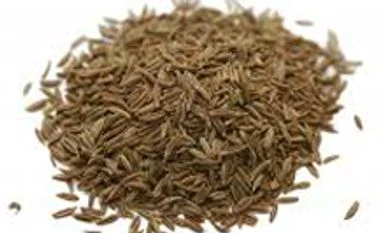 "Jeera price up 38% in Dec on low acreage, strong export demand")


 Connect with us on WhatsApp