Maharashtra relaxes stock limit for pulses importers
About 5 lakh tonnes imported yellow peas, lentils to enter market; tur and urad however expected to remain short supplied
Rajesh Bhayani Mumbai State govt exempts importers from stock limits but restriction applicable if sold to wholesalers; 500,000 tonnes of imported yellow peas, lentils to arrive in market; tur, urad shortage to persist
Maharashtra has exempted importers of pulses from stock limits. According to a notification issued last night, the first importer of pulses has been exempted from stock limits but once he sells the imported pulses to a wholesaler the limit will become applicable.
There were reports earlier that importers would be issued a time limit to sell their stock of imported pulses but the notification did not mention it.
Bimal Kothari, vice-chairman of the India Pulses and Grain Merchants Association and managing director of import firm Pancham International, said, “Prices of pulses have already started falling in the wholesale market and this will soon be reflected in the retail market.”
In the last fortnight, after stock limits were imposed, average prices of pulses declined by 10-20 per cent in wholesale markets. “Retail prices will start falling because 300,000 tonnes of pulses are lying at Mumbai port. In the next few days that stock will arrive in the market. By Diwali another 200,000 tonnes of pulses will be imported,” Kothari added.
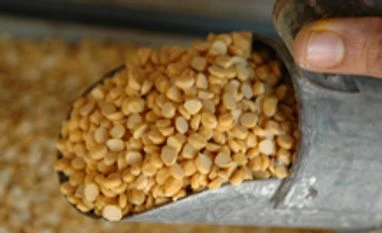
These 500,000 tonnes are largely yellow peas and lentils. The shortage in tur and urad will persist till February, when the new Indian crop arrives in the market. Tur and urad prices, which have risen sharply, will probably stay firm because of a global shortage.
“India has contracted for 2.5 million tonnes of pulses to be delivered till December: 1 million tonnes of yellow peas, 500,000 tonnes of chana and 500,000 tonnes of lentils. All other pulses, including tur, urad and moong, make up another 500,000 tonnes,” Kothari pointed out.
India’s pulses imports this year are expected to be a record 5.5 million tonnes. The domestic production is estimated at 17 million tonnes and according to the India Pulses and Grain Merchants Association, a shortage of 6-7 million tonnes will persist.
There was a sudden jump in the prices of tur and urad since September on reports of the crop being affected by inadequate rain. Myanmar, a major producer of tur and urad, too, faced floods in August that caused heavy crop losses.
Pulses are among Myanmar’s major exports and India is a big buyer. China, Taiwan and several other Asean nations regularly purchase beans and pulses from Myanmar. “Prices of these two pulses will not fall much as the deficit is expected to remain high and the new crop will come only after January-February which, if not affected by the vagaries of the weather, will help in some softening of prices at that time,” said Prerna Desai, head of research at Edelweiss Integrated Commodity Management Ltd.

 "Maharashtra relaxes stock limit for pulses importers")


 Connect with us on WhatsApp