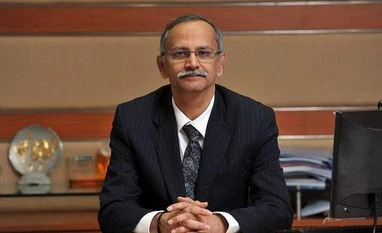
There are enough inefficiencies in the market right now, which will provide fund managers the opportunity to generate alpha over the index, says N S Venkatesh, chief executive officer, Association of Mutual Funds in India (Amfi). In an interview with Ashley Coutinho, he says credit risk funds can be managed with an open ended structure provided the risks are clearly communicated to investors. Edited excerpts:
The past six months have seen outflows from equity oriented schemes. Do you expect the trend to continue?
The markets have been making new highs and mutual fund returns are positive after a long time. So, investors are using the opportunity to book profits, a trend which looks likely to continue in the near term. The SIPs (systematic investment plans) are still stable, however, and we are seeing SIPs of over Rs 7,500 crore every month. Over 90 per cent of this money goes to equity schemes. The Budget will provide the next major cue for market direction.
Polarisation has been a consistent theme for the past two years, leading to underperformance, especially of large cap funds. How worrying is the situation?
Polarisation had accelerated in the last two years, with a few stocks gaining disproportionate weight in the benchmark indices. This had posed a few constraints to fund managers. Having said that, the rally is getting more broad based and the overall performance across equity categories has improved. With the markets near all-time highs, however, investors should temper their returns expectations. The RBI governor recently talked about the irrational exuberance in asset prices.
The past few months has seen the launch of quite a few passive ETFs/index funds. Is the time right for the industry to make the transition to passives?
The drift is towards passives, globally. In India, the passives are hardly 6-8 per cent of the total industry AUM. There will be a gradual migration towards this category, led by institutional investors. We expect the contribution of passive schemes to increase to 15-16 per cent of the total AUM over the next three years. At present, there are enough inefficiencies in the market which will provide fund managers with the opportunity to generate alpha over the index.
The industry grew at 20-25 per cent CAGR between 2013 -2018. Do you think that growth will now slow down?
We are a cyclical industry and there are periods of slowdown such as the ones seen in 2008 and 2013. MFs enjoyed a good run between 2014 and 2018 and there are signs of a slow down once more. Having said that, I would think that the industry will clock a compound annual growth rate of 18-20 per cent over the next five years. Mutual funds will gain currency as an asset allocation tool for investors. The industry’s efforts to spread financial literacy is also bearing fruit with new investors, including women, coming in every year. Growth of lower denomination SIPs of 500 rupees and less, as well as increased awareness in tier 5 and tier 6 cities will also help widen industry reach. We expect the AUM contribution from B30 (beyond top 30 cities) to increase to 22-23 per cent in the next five years (from the existing 16-17 per cent).
There is a belief that the regulator has been micro managing the industry during the past one year, with a flurry of rules, especially on the debt side. What are your thoughts?
This regulator has been very proactive, especially post the IL&FS and Franklin Templeton episodes. They have tightened regulations wherever necessary to protect investor interest. It was the need of the hour and we cannot call it micromanagement. Besides, the regulator does hold regular consultations with the Amfi, the Mutual Fund Advisory Committee and even individual AMCs before prescribing new norms.
The industry has largely relied on digital to push sales during the pandemic. Can this digital push be sustained?
The entire financial services industry, be it banks, insurance or mutual funds, had to fall back on digital to reach out to customers. This has helped in reducing transaction cost. The trend should continue given the advent of new technology such as 5G. The digital push will also enable mutual funds to better their reach across the country.

 "MF industry will grow at 20% CAGR for the next five years: Amfi CEO")












 Connect with us on WhatsApp