RBI flags issues in valuing corporate bonds for mutual funds, others

The development comes close on the heels of broader moves to better supervise corporate bond pricing
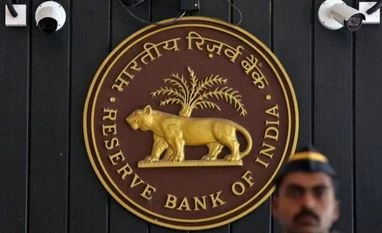
Reserve Bank of India
FILE PHOTO: A security personnel member stands guard at the entrance of the Reserve Bank of India (RBI) headquarters in Mumbai | Photo: Reuters
Sachin P Mampatta
Last Updated : Jan 02 2019 | 1:05 AM IST
The Reserve Bank of India has pointed to the need for addressing potential issues in the way the Rs 23.6-trillion mutual fund industry, as well as other institutions like banks, value corporate bonds.

The central bank’s periodic Financial Stability Report issued on Monday noted that appropriate valuation of these instruments depended on having a good benchmark and transparent corporate spreads.

“However, the extant valuation frameworks for corporate bond book appear to be falling short in terms of both benchmarking issues and valuation methods,” said the report.

This creates a number of issues. It fails to accurately reflect the financial health of the borrower. It can also affect the market at large. Investors would reallocate capital only to the safest securities if they discovered some problems in which corporate bonds had been valued. The holders of these securities might also not be inclined to trade in such securities because of price discovery issues, the report noted.


Essentially, the report suggests the possibility of valuation mismatches in the market under the current set of practices, which can have broad repercussions. Debt accounts for Rs.12.7 trillion of the mutual fund industry’s assets.

The remarks come in the midst of a larger debate on the corporate bond market and the need for proper valuation.  

The Securities and Exchange Board of India (Sebi) mentioned uniform guidelines for mutual funds to price corporate bonds. It also said that it would evolve a regulatory framework by which agencies could provide pricing services to mutual funds. The uniformity would eventually extend across the financial sector, not just mutual funds, according to a statement issued after the December 12 board meeting.  

“...Department of Economic Affairs, Ministry of Finance... will undertake the exercise of bringing uniformity in the valuation process for corporate bonds for all regulated entities across the financial sector,” it said.
 
Jimmy Patel, managing director and chief executive officer at Quantum Asset Management Company, said regulators could consider valuing all securities on a mark-to-market basis. Currently, this is necessary only for the securities that mature in more than 60 days. “Any and all paper should be valued on a mark-to-market basis,” he said.

Mark-to-market valuation is a means by which you value your holdings based on what price they would fetch if they were sold in the open market. This provides a good idea of the actual value which could be realised from the portfolio. This can be difficult to do if markets are illiquid.

Dhirendra Kumar, chief executive officer of fund tracker Value Research said that mutual funds had done a credible job with very few instances of bad debt compared to the banking sector. This is in spite of the fact that there is a mismatch in terms of the period they lend for and the easy access to capital which is made available to investors in their schemes.

“It is a fact that mutual funds hold assets and provide liquidity to investors when the underlying is not as liquid,” he said.

The RBI report also made similar observations.

Growth in mutual fund assets reflect that the valuation is largely representative of the market, according to the report. It added that the absence of fair valuation would have resulted in investors arbitraging imperfectly-priced units in the market which had not happened.

However, it added that “it is important to deepen the corporate bond market to address the infirmities in appropriate benchmarking of valuation of corporate bonds.”
Valuation woes
  • Corporate bond valuation can be murky
  • RBI flags benchmarking, valuation methods as potential issues
  • Sebi working on uniform valuation policy for MFs
  • Finance ministry working on similar policy for all regulated entities
  • Mutual funds hold over Rs.12 trillion in debt assets

One subscription. Two world-class reads.

Already subscribed? Log in

Subscribe to read the full story →
*Subscribe to Business Standard digital and get complimentary access to The New York Times

Smart Quarterly

₹900

3 Months

₹300/Month

SAVE 25%

Smart Essential

₹2,700

1 Year

₹225/Month

SAVE 46%
*Complimentary New York Times access for the 2nd year will be given after 12 months

Super Saver

₹3,900

2 Years

₹162/Month

Subscribe

Renews automatically, cancel anytime

Here’s what’s included in our digital subscription plans

Exclusive premium stories online

  • Over 30 premium stories daily, handpicked by our editors

Complimentary Access to The New York Times

  • News, Games, Cooking, Audio, Wirecutter & The Athletic

Business Standard Epaper

  • Digital replica of our daily newspaper — with options to read, save, and share

Curated Newsletters

  • Insights on markets, finance, politics, tech, and more delivered to your inbox

Market Analysis & Investment Insights

  • In-depth market analysis & insights with access to The Smart Investor

Archives

  • Repository of articles and publications dating back to 1997

Ad-free Reading

  • Uninterrupted reading experience with no advertisements

Seamless Access Across All Devices

  • Access Business Standard across devices — mobile, tablet, or PC, via web or app

Next Story



