Sebi chief Tyagi to meet investment bankers over primary market reforms
On the cards: Higher quotas for mutual funds in IPOs, CPSE ETF under IPOs, reducing IPO timeline
The Securities and Exchange Board of India (Sebi) is readying the ground for another lot of changes in the primary market.
Higher reservations for mutual funds (MFs) in Initial Public Offers of equity (IPOs), bringing the CPSE exchange-traded fund (ETF) under the IPO fold, further tweaks to the anchor investor allotment process, besides a shorter IPO time frame, are some of these being considered.
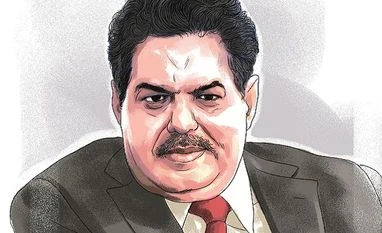
Ajay Tyagi, the new Sebi chairman, has called for a meeting on April 18 with select investment banks and the sectoral body, Association of Investment Bankers of India, for more suggestions. This first formal interaction between the chief and the investment banking community was earlier scheduled for April 3.
The proposal on higher reservations for MFs in the anchor and qualified institutional buyers (QIBs) portion of a public offering comes when there has been a sharp monthly increase in investor inflow into equity funds. Currently, MFs have 30 per cent reservation in the QIB quota. Up to 60 per cent of the quota can be used for anchor allotment.
“A lot of retail (individual) investors are taking the MF route, instead of direct equity investing. Therefore, we are pitching for higher reservations for domestic MFs,” said an investment banker, who would be part of the meeting.
Among the other things likely to be discussed is to allow IPO-like marketing of the Central Public Sector Enterprises (CPSE) ETF. Currently, ETFs are treated like MF products and, hence, sold in the form of a New Fund Offer or Further Fund Offer. Bringing ETFs under the IPO fold will increase investor interest and result in greater participation, the bankers are likely to tell Sebi. The government is likely to launch a new CPSE ETF in the next few months.
Besides, investment bankers plan to ask for easing of the allotment process for anchor investors. Currently, anchor allotment takes places a day before an IPO opens, while the anchor refund process happens with other investors. More important, the ASBA facility (where the application amount stays blocked in a bank account till the time of allotment) is not available for anchor investors.
“An anchor investor applies for say Rs 100 crore worth of shares but gets allotment for only Rs 30 crore worth. The balance Rs 70 crore remains stuck for at least a week. We want Sebi to look into this aspect,” explained a banker.
Lack of primary fund raising through IPOs is another aspect that is likely to get discussed. Funds raised by way of IPOs hit a six-year high of Rs 28,220 crore in 2016-17 but less than a third of it was new equity issuance.
“Companies that had raised pre-IPO capital from private equity investors are mostly coming to the market for providing exits to those investors. There are a lot of companies outside this universe, which need growth funds. Maybe they are not completely aware of the benefits of the capital market,” said Mahavir Lunawat, managing director, Pantomath Advisory Services.
Investment bankers are likely to discuss difficulties faced in IPOs of loss-making companies. By Sebi rules, a company with no operating profit in the previous three years has to have at least 75 per cent QIB subscription.
“A lot of institutional investors are averse to investing in small-ticket IPOs. So, getting 75 per cent QIB subscription becomes a problem in IPOs of small companies. We either want Sebi to ease this norm or expand the definition of QIBs to include ultra-rich investors or portfolio managers,” said an investment banker, asking not to be named.
I-bankers are also likely to give suggestions for bringing down the IPO timeline from the current six working days. And, to reduce the IPO period from the current three days to perhaps two days. Sebi and the Reserve Bank of India will have to work together if the IPO timeline has to be reduced further, as the proposal will require investors giving a power of attorney to brokers for deducting funds. This will help do away with physical application in IPOs—a move necessary to bring down the time taken for an IPO to close and the company to list.

 "Sebi chief Tyagi to meet investment bankers over primary market reforms")











