
Sebi's proposed rules for MF distribution take fund houses by surprise
Sore point is role separation, bar on investment advisors from selling, distributors from advising
 "Sebi's proposed rules for MF distribution take fund houses by surprise")
premium
WebinarsNew
Deep DiveNew
Explore Business Standard
Sore point is role separation, bar on investment advisors from selling, distributors from advising
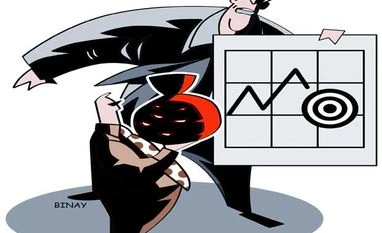
A recent thrust on 'clear segregation' between mutual fund advisory and distribution by the Securities and Exchange Board of India (Sebi) through a consultation paper has received mixed reactions from sector officials and experts.
Terming the paper as 'one of the harshest' in recent times, fund houses were taken aback by the regulator's move. At a time when everybody in the industry was under the impression that advisory, distribution and commission had been placed on the back burner, the recent development came as a surprise to many.
"It was an out of a blue kind of step and nobody was consulted for this," said a chief executive officer (CEO) who preferred to remain unnamed.
According to the market regulator, "to prevent the conflict of interest that exists between 'advising' of investment products and 'selling' of investment products by the same entity, there should be clear segregation between these two activities."
This essentially means that an investment adviser can only advice and can't sell any mutual fund products. Further, a distributor can only sell mutual fund products but can't advise clients.
Large distributors including banks, NBFCs and corporates are asked to omit the separately identifiable departments or divisions (SIDDs). These were used for execution and distribution services of mutual funds. Sebi, now wants, these entities to segregate the two - distribution and advisory within six months through a separate subsidiary.
Though industry officials say it will not be a 'big deal' for large distributors. But question remains will large distributors actually do it? Or will they declare themselves MFDs?
"My sense is, no large distributors of the sector would like to be called as mutual fund adviser now. Given the hardships attached in getting a separate payment as advisory fees in India from clients, I do not think such national distributors would easily let the commission part go away," says a Mumbai-based independent expert of the mutual fund sector.
Sebi also has proposed to scrap the practice of usage of 'Independent Financial Advisers' by distributors. Instead, such entities will solely be called 'Mutual Fund Distributors' or MFDs. And that such distributors have to disclose in a form to clients which should also include the disclaimer 'that he/she (distributor) may not be acting in the best interest of investor'.
"This is bizarre," reacts a top CEO. " It is as if a compounder (who is not a doctor) saying to the patient before giving an injection that he may not survive. I think, Sebi will do away with this point sooner or later," he adds.
Dhirendra Kumar, chief executive of fund tracking firm Value Research, says, "These new rules for mutual fund distributors do not seem very practical. These are micro-regulations which do not actually regulate.
"One of the proposals is that distributors will be forbidden from offering advice. They can describe material facts about mutual funds, but they cannot give advice. This can only be implemented by having a list of very well-defined topics about which the distributor and investor cannot have a conversation. How someone can think this to be a practical, implementable law boggles the mind. And again, organisations like banks get an exemption merely by having separate departments that are labelled 'Advice' and 'Distribution'," adds Kumar.
However, fund managers, on a positive note, said that this paper is a clear deviation from the policies being propagated by the regulator till recently.
"With this paper, Sebi appears to have sent a message that it wants existence of both the entities - advisers and distributors. Else, there was an impression that the regulatory was thrusting the advisory model and the sector would have to do away with distributor in due course of time. At least, that is not happening now and I am glad for the small distributors which are industry's foot soldiers," said the CEO cited above.
They have also welcomed Sebi's move to relax the educational qualification for employees of registered investment advisers and the slashing of the fees for large players in the advisory business.
Already subscribed? Log in
Subscribe to read the full story →

3 Months
₹300/Month
1 Year
₹225/Month
2 Years
₹162/Month
Renews automatically, cancel anytime

Premium stories handpicked daily by our editors


News, Games, Cooking, Audio, Wirecutter & The Athletic
Digital replica of our daily newspaper — with options to read, save, and share


Insights on markets, finance, politics, tech, and more delivered to your inbox
In-depth market analysis & insights with access to The Smart Investor


Repository of articles and publications dating back to 1997
Uninterrupted reading experience with no advertisements


Access Business Standard across devices — mobile, tablet, or PC, via web or app
First Published: Jun 27 2017 | 6:02 PM IST


 Connect with us on WhatsApp