Gold bonds' popularity linked to investment demand

But govt's moves will provide more liquidity to SGBs in the secondary market
graph
Sanjay Kumar Singh New Delhi
Last Updated : Jul 28 2017 | 4:51 PM IST
Despite the launch of the Sovereign Gold Bond (SGB) Scheme in November 2015, the government doesn’t seem to have been able to satiate Indians’ demand for physical gold. According to data from GFMS-Thomson Reuters, total gold import in calendar year 2016 was 510 tonnes. In the first half of 2017, gold imports stood at 508 tonnes. And the government has garnered only Rs 4,769 crore (17 tonnes in volume terms) from the sale of SGBs in as many as nine tranches. 

The government has responded by announcing sweeping changes to make the yellow metal more attractive to investors. But, while these changes are positive, experts say they may boost the popularity of SGBs only in the medium- to long-term, once gold's investment outlook improves. 

Until now, SGBs were issued in tranches; they will now be available on tap. “Availability was not such an issue even in the past as the SGB issues came frequently enough. However, the benefit of making it available on tap will be that a lot of buying happens on occasions like Dhanteras and Akshaya Tritiya. People will be able to invest in these bonds now on those occasions as well,” says Vishal Dhawan, chief financial planner, Plan Ahead Wealth Advisors. 

While SGBs were listed on the stock exchanges to provide an avenue to investors who wanted to exit them prematurely, poor liquidity meant this option didn't serve its intended purpose. Now, the government has decided to appoint market-makers to improve their liquidity on the exchanges. One of the reasons gold is attractive as an investment is that it can be quickly converted into cash during emergencies. The lack of liquidity in SGBs was a concern. Market-making will give added confidence to investors that they will be able to exit them at will. 

The government has also decided to give the finance ministry the flexibility to design and introduce variants of the scheme with different interest rates and different risk-return profiles. Today you only have one bond with an eight-year tenure. Bank fixed deposits, on the other hand, are available in several tenures. Experts say the government is perhaps trying to do something similar here. But, they warn, if SGBs become available in shorter tenures, they would also become risky. “Gold can be volatile and its capital value can decline in the short term,” says Dhawan.  

The government has also decided to hike the investment limit per fiscal year from 500 g earlier to 4 kg for individuals and Hindu Undivided Families (HUF). The earlier limit was a constraint for high net worth individuals (HNIs) who wanted, say, a 10 per cent exposure to gold in their portfolios via SGBs, or wanted to accumulate for their children’s marriage. They will now be able to buy a reasonable amount each year.

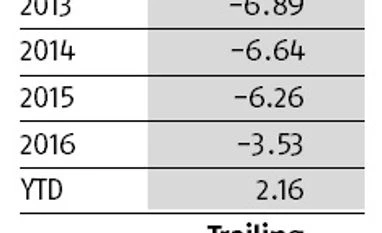
Gold has not been a favoured asset class in the recent past. “Over the past two years, the US has been raising interest rates, so money has been moving out of gold and into the dollar,” says Ajay Kedia, managing director, Kedia Commodities. Domestically, inflation is down, the rupee has been strengthening, and equities have been doing well. Such conditions are not conducive for gold. But, there are a few factors that could support gold. “The euro zone and China are pumping money into the economy. Any spike in geopolitical tensions, such as between India and China or the US and North Korea could support gold,” says Kedia. Hence, investors need to maintain some allocation to the yellow metal in their portfolios all the time. “A 10-15 per cent allocation is advisable,” says Arvind Rao, financial planner and founder, Arvind Rao & Associates. 

He adds the government’s initiatives to popularise SGBs will bear fruit only in the medium term when gold’s investment outlook improves.

One subscription. Two world-class reads.

Already subscribed? Log in

Subscribe to read the full story →
*Subscribe to Business Standard digital and get complimentary access to The New York Times

Smart Quarterly

₹900

3 Months

₹300/Month

SAVE 25%

Smart Essential

₹2,700

1 Year

₹225/Month

SAVE 46%
*Complimentary New York Times access for the 2nd year will be given after 12 months

Super Saver

₹3,900

2 Years

₹162/Month

Subscribe

Renews automatically, cancel anytime

Here’s what’s included in our digital subscription plans

Exclusive premium stories online

  • Over 30 premium stories daily, handpicked by our editors

Complimentary Access to The New York Times

  • News, Games, Cooking, Audio, Wirecutter & The Athletic

Business Standard Epaper

  • Digital replica of our daily newspaper — with options to read, save, and share

Curated Newsletters

  • Insights on markets, finance, politics, tech, and more delivered to your inbox

Market Analysis & Investment Insights

  • In-depth market analysis & insights with access to The Smart Investor

Archives

  • Repository of articles and publications dating back to 1997

Ad-free Reading

  • Uninterrupted reading experience with no advertisements

Seamless Access Across All Devices

  • Access Business Standard across devices — mobile, tablet, or PC, via web or app

Next Story



