The predominant view has been that a higher debt burden due to spectrum payouts would lead to an increase in rates by telecom companies for voice services.
However, this has yet to happen. The latest auction was in February. Between the December 2014 and March 2015 quarters, Idea’s year-on-year average revenue per minute (ARPM) for voice was down nearly seven per cent and Bharti Airtel's 2.5 per cent. In the March quarter, Idea's voice realisation fell 4.8 per cent and Bharti's by 3.8 per cent from the December one.
The falling realisations indicate the higher spectrum costs have not been passed on to customers. Sunil Tirumalai and Chunky Shah of Credit Suisse say the same argument, of a high debt burden leading to higher rates, was made in the February 2014 auctions. Yet, the record show, they say, that pricing power in the Indian telecom sector is elusive.
Lower rates from the smaller companies make it difficult for the larger ones to raise rates. The smaller entities account for 17 per cent of revenue share and 20.5 per cent of voice minutes. Says an analyst at a domestic brokerage, “Voice ARPMs over the past couple of years have, at best, stopped declining and stabilised; there has not been much upward movement.”
Most analysts believe incumbent operators will need to raise voice rates by five paise a minute (upwards of 13 per cent) to neutralise the cost of higher interest and depreciation after the March 2015 auction.
Any increase, however, will be gradual, given the level of competition. HSBC analysts say there is a case for improvement in voice realisation, particularly driven by Idea Cellular, which has been discounting voice minutes to take market share. A meaningful improvement is expected to happen only in the September quarter, with the voice realisation rate expected to fall in the June quarter, driven by the recent cut in termination charges and roaming rates.
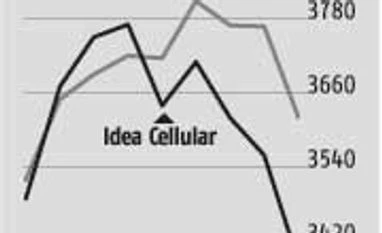
While analysts expect only a gradual increase in voice rates, the stocks of Bharti and Ide have spurted by 24-37 per cent since the start of the telecom rally last month. The end of uncertainty on spectrum availability and the hope that high payouts will lead to a rise in rates were key reasons. While the selloff last week has taken some sheen off the returns, the predominant view of the Street about incumbents' prospects continues to be bullish, with 66-75 per cent of analysts having a 'buy' call on Bharti and Idea.
The other reason for the Street’s bullishness has been the expectation of imminent consolidation, given the weak metrics of smaller entities. However, this looks difficult, given the stretched balance sheets and the need for capital expenditure as companies try to expand their data network, say analysts at Morgan Stanley.
This also implies, companies, especially the smaller ones, have little option but to raise rates, for improving the cash flow and lowering the pressure on their balance sheet. Will they and when are the two questions.
Going ahead, the Street will keep an eye out for signs of an increase in ARPM. Both Bharti and Idea have indicated that rates will have to be raised, as higher volumes alone will not suffice to meet the higher costs. Analysts at Axis Capital estimate that every paisa increase in revenue per minute will increase consolidated operating earnings (Ebitda, on earnings before interest, taxes, depreciation and amortisation) by three to four per cent. For Idea which closed FY15 with an Ebitda of Rs 9,768 crore, a three paise increase will improve Ebitda by about Rs 1,000 crore.
The other trigger for the sector is data growth, where volume and revenues have been doubling year-on-year. While growth for the major companies has been strong, the coming launch of Reliance Jio will decide on the pricing in this segment for incumbents.

 "Street's faith in tariff hikes by telcos may be misplaced")


 Connect with us on WhatsApp