The commodities market needs a strong regulator: P K Singhal
Interview with Joint Managing Director, Multi Commodity Exchange
Rajesh Bhayani Mumbai The Union Budget for 2015-16, being presented on Saturday, is expected to address the issue of commodities market-related reforms.
P K Singhal, joint managing director of Multi Commodity Exchange, speaks to Rajesh Bhayani. Edited excerpts:
There are reports of the government considering to merge the Forward Markets Commission with the Securities and Exchange Board of India. As an exchange, will it be a good move? So far, the discussion was on amending the Forward Contracts Regulation Act to strengthen FMC and allow options trading in commodities, among others. From an exchange’s perspective, I can say we need a strong regulator, with ability to ensure more depth in the market, with wider participants.
Will it be smooth sailing for the commodities market if FMC is merged with Sebi? Merging regulators of two different types of market will not be an easy task. These markets are fundamentally different and require different expertise. Deliveries in commodities are handled differently than in the capital market. Any type of price movement in commodities has a different impact for users, growers/producers and consumers. I am sure the government would have considered all aspects.
What do you expect from the Budget? We hope the finance minister will remove or relax the Commodities Transaction Tax, introduced in 2013. The tax is on non-agri commodities. Due to the CTT of Rs 10 per Rs 1 lakh of trade or 0.01 per cent, liquidity and hedging efficiency on the exchanges have been been significantly impacted. A number of corporate hedgers are now finding hedging in global exchanges more attractive to manage their risks than hedging in India, notwithstanding the currency risks they encounter in doing the former. Commodity futures are basically for hedging but the tax and the reduced liquidity due to that are keeping hedgers away. India can be a price setter in many commodities but the taxes like CTT hurts that.
In China, the government supports the commodities business. Three of the top five exchanges globally are from China and the government actively intervenes in commodities markets to support prices. It is a good lesson for India.

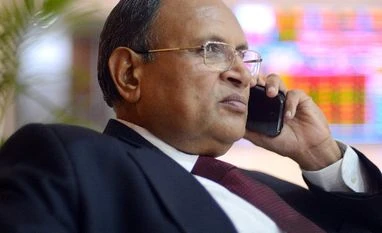 "The commodities market needs a strong regulator: P K Singhal")


 Connect with us on WhatsApp