Nepal relies on India for majority of its imports, and due to the recent crisis Nepal's daily life has been crippled and so far negotiations between the leaders have failed to solve the ongoing crisis
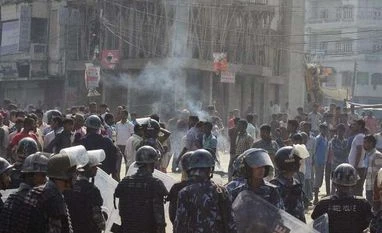
Ethnic Madhesi protesters stand near smoke from a tire set on fire by them, as Nepalese policemen stand guard near the Central Development Office at Birgunj, a town on the border with India, Nepal. Photo: PTI
In a recently held conference, former member of National Planning Commission of Nepal, Swarnim Wagle, expressed concern over the grieving impact of the economic blockade due to Madheshi agitation since the past four months in the Himalayan nation.
"The direct hit was of course medicines, food, and fuel. People have been suffering a lot. All the industries have been shut down, people have been laid off," said, Wagle, Former member of National Planning Commission of Nepal, addressing a conference titled 'Trade and Employment challenges: in South Asia'.
Since the Madhesi protest began in September this year, businesses are struggling to stay open, with only 30% of Nepal's industries operational.
"Everything is running under half capacity. Hospitals, restaurants, and the public transportation have been facing difficulties and yet we are giving rise to a sort of underground economy which should be hard to tame later on and it already imposing its rule of law. It is a challenge for a poor country like Nepal and when a monster is rising as a result of this blockade, what is happening is deeply unfortunate," Wagle said.
Due to the ongoing crisis, thousands of cargo trucks stalled at the Indian border, Nepalese gas stations have received only 15% of regular fuel supplies, which is making survival difficult.
"The earthquake is the biggest natural disaster in over 80 years in Nepal, and the blockade is probably having an economic impact that is greater than that the earthquake posed. All the industries are shut down now. There is severe shortage of fuel, essential medicines and food," said Wagle.
Nepal relies on India for majority of its imports. Due to the recent crisis Nepal's daily life has been crippled and so far negotiations between the leaders have failed to solve the ongoing crisis.

 "Indo-Nepal border blockade creating huge economic crisis: Wagle")


 Connect with us on WhatsApp