
Quick fix farm loan waivers should be replaced with policy: Urjit Patel
India's agrarian economy is the source of around 15% of GDP
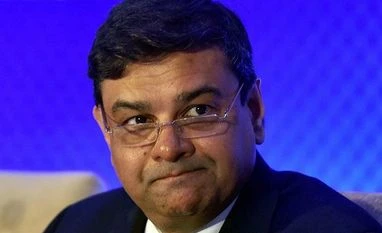 "Quick fix farm loan waivers should be replaced with policy: Urjit Patel")
WebinarsNew
Deep DiveNew
Explore Business Standard
India's agrarian economy is the source of around 15% of GDP
Dwelling upon the spillover effects of the "quick fix" solution of farm loan waivers to ease farmers' distress, RBI Governor Urjit Patel has said that the government instead should move to more fundamental solutions, including crop insurance and opening up the farm economy to market forces and open trade.
"In the absence of coordinated and sustained efforts to put in place elements of a virtuous cycle of upliftment, loan waivers have periodically emerged as a quick fix to ease farmers' distress," Patel said here at a seminar on 'Agricultural Debt Waiver - Efficacy and Limitations' on Thursday evening.
"From a policy perspective, what needs to be done is to move away from palliatives in the form of debt relief and into a more fundamental solution that enhances welfare all around," he added.
The Reserve Bank of India (RBI) Governor said that many elements of this optimal approach are well known -- crop insurance, infrastructure, irrigation, technology-enabled productivity improvements and opening up the farm economy to market forces and open trade.
Patel lauded the government's initiatives like establishing a nation-wide market for agricultural produce, through eNAM, the Pradhan Mantri Fasal Bima Yojana, the Pradhan Mantri Krishi Sinchai Yojana, the Paramparagat Krishi Vikas Yojana and the national drive towards financial inclusion.
"The coming to fruition of these initiatives holds the potential of achieving the mission of doubling farmers' income over time. We need to ensure that their benefits percolate down to all the intended recipients," he said.
While in no way detracting from the acute distress that farmers face with every disruption in crop cycles, it is important to recognise that there are externalities that spill over beyond the farm sector and eventually, other economic agents and other parts of the economy get affected, he added.
He said that the spill over effects need to be minimised so that the incidence of the burden on the taxpayers can be reduced.
The first impact of any loan waiver is on the balance sheet of lending institutions, be they formal or informal, Patel said.
"This is inherent in the inevitable lags, in the timing of impact and the arrival of compensation from the government. In this, the quality of assets deteriorates. Loan waivers impact the state of public finances in the form of higher than budgeted revenue expenditure. This, in turn, has to be financed by additional market borrowings which pushes up interest rates, not just for the states but for the entire economy," he said.
Even if the loan waiver is accommodated within budgetary provisions, it will force cutbacks in other heads of expenditure, the RBI Governor noted.
"If, on the other hand, budgetary provisions are exceeded, higher spending and widening of the fiscal deficit have, as experience has shown, inflationary consequences and possible spillovers that could undermine external viability. Also, research points to adverse welfare effects because, ultimately, loan waivers involve a transfer of resources from tax payers to borrowers," he said.
Patel said that there is a gamut of issues that have intensified the anguish of our farmers and farm loan waivers have brought forward the urgency of designing lasting solutions to the structural malaise that affects Indian agriculture.
"On the other, there are concerns about the macroeconomic and financial implications, how long they will persist in impacting the economy, the possible distortions that they could confront public policies with and the ultimate incidence of the financial burden," he said.
India's agrarian economy is the source of around 15 per cent of GDP, 11 per cent of our exports and provides livelihood to about half of the country's population.
The importance of the sector from a macroeconomic perspective is also reflected in a significant flow of bank credit to finance agricultural and allied activities relative to other sectors of the economy.
Outstanding bank advances to agriculture and allied activities have risen from about 13 per cent of GDP originating in agriculture and allied activities in 2000-01 to around 53 per cent in 2016-17.
(Only the headline and picture of this report may have been reworked by the Business Standard staff; the rest of the content is auto-generated from a syndicated feed.)
First Published: Sep 01 2017 | 8:40 PM IST


 Connect with us on WhatsApp