Rashtriya Swayamsevak Sangh ideologue S Gurumurthy on Monday said the newly issued Rs 2,000 currency note is a "stopgap arrangement" to tide over the cash crunch after demonetisation, and it will ultimately be withdrawn by the government, albeit gradually.
Gurumurthy, who is said to be in the loop all through the demonetisation process, said in an interview with India Today news channel that the Rs 2,000 note was introduced only to meet the demand-supply gap after Rs 500 and Rs 1,000 notes were sucked out of circulation.
He said the banks would be asked to hold back Rs 2,000 notes and replace them with lower denomination notes.
"Obviously, the banks will be told not to return Rs 2,000 notes they receive. Slowly, the banks will accumulate Rs 2,000 notes and replace them with lower denomination notes," said Gurumurthy, a prominent member of the RSS-backed think tank Vivekananda International Foundation.
He said the government would be phasing out Rs 2,000 notes and not demonetising them.
"We have phased out many series of notes like this in the past," he said.
Gurumurthy said the government was committed towards lower denomination currency.
Gurumurthy's remarks came after the government's contradictory stand that it was demonetising Rs 1,000 notes since higher denomination currency encouraged black money, but instead introduced Rs 2,000 note.
Defending the Narendra Modi government's decision to demonetise Rs 500 and Rs 1,000 currency notes, in a separate interview to CNN-News18 channel, Gurumurthy said the move has been successful in achieving its objective, which was to "record the unrecorded roaming cash".
"The objective of demonetisation is to record the unrecorded roaming cash. That is the first objective and then you'll find out whether somebody has defrauded and made use of it," he said.
"What these unrecorded money is doing to the economy, that is being stopped. According to me, that is the most important issue," he said.

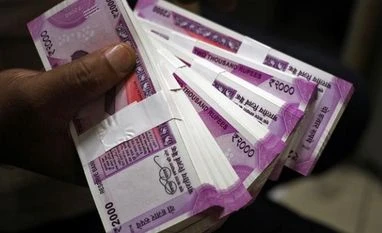 "Rs 2,000 notes a temporary arrangement, will be ultimately withdrawn: RSS ideologue")


 Connect with us on WhatsApp