
Terror funding with fake notes reduced due to demonetisation: Jaitley
The Narendra Modi govt banned Rs 500 and Rs 1,000 notes on this day a year back
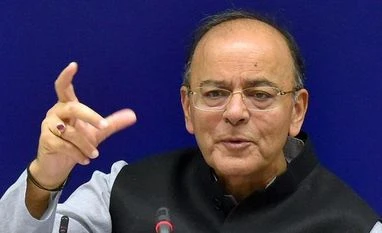 "Terror funding with fake notes reduced due to demonetisation: Jaitley")
WebinarsNew
Deep DiveNew
Explore Business Standard
The Narendra Modi govt banned Rs 500 and Rs 1,000 notes on this day a year back
A year after demonetisation, Finance Minister Arun Jaitley on Wednesday said terror funding through counterfeit currency had come down drastically in Jammu and Kashmir and Chhattisgarh.
"It is very clear that terror financing has dropped drastically. We have learnt from security agencies in Jammu and Kashmir and Chhattisgarh that cash flow has come down. The number of incidents of stone throwing has dropped in Jammu and Kashmir," he told DD News.
Jaitley also said cash acted as a lubricant in terror funding.
The Narendra Modi government banned Rs 500 and Rs 1,000 notes on this day a year back.
"It was an effort to change the prevalent (economic) situation. India wants to migrate from middle-income economy to a developed one. But in our system most big investments are done through black money. Even in businesses, people maintain two types of (accounts) books. People are always trying to evade taxes."
The minister said when an honest citizen pays tax, he also pays for the one who evades tax.
"That is the reason you have to change the situation. It is not possible to change it if there is more cash in the system. If we want more development, we have to have less cash in the system."
Jaitley dwelt on the importance of digital transactions.
Admitting that one demonetisation drive will not do away with all the bad economic practices, Jaitley said: "It is one year of demonetisation and one address by the Prime Minister will not stop it. But in the last one year, taxpayers' number has gone up. Terror funding has been squeezed."
He said demonetisation had made it clear that bigger amounts of black money accumulation in cash were no longer possible.
"We have learnt from authorities in Switzerland that Indians have deposited less cash."
Talking about decreasing cash-to-GDP ratio, Jaitley said the Reserve Bank of India was trying to bring it down further. Cash-to-GDP ratio has come down from 12.5 per cent to 9 per cent.
"When you have an alternative, why will you depend on cash?"
Regarding the Goods and Services Tax (GST), he said: "It is the fourth month of GST and the number of assesses has increased by 40 per cent."
First Published: Nov 08 2017 | 3:57 PM IST


 Connect with us on WhatsApp