Are divine decrees more sacrosanct than the man-made laws? Do the "personal laws" of a community always have precedence over the Constitution? The questions came back to haunt India's collective conscience through a string of cases in 2016—three decades after it was "settled" in what can be called a high-handed way.
The year-that-was saw the Muslim orthodoxy pitted against the courts of law on more occasions than one with the courts, as well as the liberal opinion, repeatedly questioning the Muslim clergy's contention that personal laws were above all scrutiny.
The not-so-happy memories of the Shah Bano case of 1985-86—where the Rajiv Gandhi government, riding on a brute majority in Parliament, upturned the Supreme Court's ruling in the divorcee's favour through legislation—came haunting back with Shayara Bano's case.
Shayara Bano, a 38-year-old woman from Uttarakhand, filed a Public Interest Litigation (PIL) in the Supreme Court to ban the practice of triple talaq. Her move came after she suffered for 14 years in a marriage with an Allahabad man.
Shayara Bano, a mother of two, said that she was made to undergo at least half a dozen abortions which wrecked her emotionally and physically. She was not allowed to meet her close relatives (Notably, the husband did not deny this). But she still lived on, trying to somehow save her marriage. What she got instead was a talaqnama through a telegram.
The Supreme Court is hearing the case.
In yet another jolt to the champions of conservatism, the Allahabad High Court in December dubbed triple talaq as "cruelty against Muslim women" while hearing petitions filed by Hina and Umarbee, two residents of Bulandshahr in Uttar Pradesh.
The court observed that the Islamic law was being wrongly interpreted.
The women's rights brigade got a shot in the arm when after five years of legal battle, the Bombay High Court ruled in August that women had equal right as men to pray at the Haji Ali shrine. The Supreme Court upheld the decision and a group of 250 women finally entered the shrine on November 29.
Meanwhile, the Union government told the Supreme Court that 'triple talaq', 'nikaah halala' and polygamy were not integral to the practice of Islam or essential religious practices.
Clerics and several Muslim organisations, cutting across sects and schools of jurisprudence, decried the government's stand as well the courts' verdicts as "uncalled for interference" in the personal laws of the community.
The courts are, however, not convinced.
In October, the Law Commission posted on its website 16 questions to seek public opinion on the uniform civil code (UCC) issue.
A number of prominent Muslim organisations, led by the All India Muslim Personal Law Board (AIMPLB), erupted in protest and dubbed the questionnaire as "misleading and divisive".
Cutting across schools of jurisprudence, the Sunni, Shia, Barelvi and Ahle Hadith, all called this an "unacceptable attack" on their identity and accused the Narendra Modi government of politicising the issue ahead of the assembly elections in five states, including Uttar Pradesh and Punjab.
However, unlike the Rajiv Gandhi government that buckled under pressure from the practitioners of patriarchy in the 1980's, the Narendra Modi government has been unwavering in its "commitment" to women's right to equality. And senior government functionaries are openly advocating a Uniform Civil Code (UCC) for all.
While no major political party is against the UCC in principle, they feel it should be done with "consensus" and not imposed unilaterally.
Finally, with both the Muslim orthodoxy and the government unwilling to cede their space, the year 2017 may see some sparks flying on the Shayara Bano front.

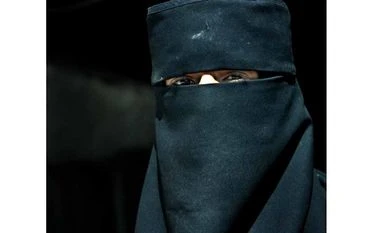 "Muslim orthodoxy against courts made news in 2016")

