
WH slams China for retaliatory tariffs of up to 25% on 128 US products
China said the move was intended to safeguard its interests and balance losses caused by the new tariffs. The tariffs came into effect from Monday
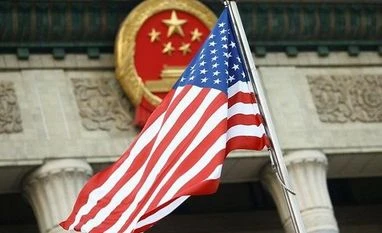 "WH slams China for retaliatory tariffs of up to 25% on 128 US products")
WebinarsNew
Deep DiveNew
Explore Business Standard
China said the move was intended to safeguard its interests and balance losses caused by the new tariffs. The tariffs came into effect from Monday
The White House has slammed China after it imposed retaliatory tariffs as high as 25 per cent on 128 American products, including pork and wine.
Beijing's tit-for-tat move came on Monday following US President Donald Trump's decision to slap trade charges of up to $60 billion on Chinese imports on March 22. Trump did not revoke them despite Beijing's stern warning.
Reacting angrily to Beijing's action, the White House said: "Instead of targeting fairly traded US exports, China needs to stop its unfair trading practices which are harming US national security and distorting global markets."
"China's subsidisation and continued overcapacity is the root cause of the steel crises," spokeswoman Lindsay Walters said.
The back-and-forth measures reflected the escalating tensions between the US and China, which President Trump has described as an "economic enemy", the BBC reported on Tuesday.
China said the move was intended to safeguard its interests and balance losses caused by the new tariffs. The tariffs came into effect from Monday.
US stocks fell sharply and Asian shares traded lower as trade war fears mount. On Wall Street, the S&P 500 Index lost 2.2 per cent, while the Dow Jones Industrial Average dropped 1.9 per cent.
In Asia, Japan's Nikkei 225 opened down about 1.5 per cent on Tuesday but recovered a little to close 0.45 per cent lower. The Shanghai Composite was off one per cent and the Hang Seng down by 0.6 per cent in afternoon trading.
The US took two major measures on tariffs in March that triggered tensions with China. The first was on steel and aluminium while the second was on intellectual property.
The global steel and aluminium tariffs were announced on March 8. The US was using national security laws to impose the tariffs, which it said were needed to protect US producers.
Allies like Canada, Mexico, South Korea, Brazil and the EU were in line for exemptions, pending talks.
The US tariffs related to intellectual property are expected to be set out this week. Washington's tough stance came after a US investigation into the alleged theft of intellectual property and Beijing's "Made in China 2025" programme, which the US said put its companies at a disadvantage.
He said the China programme unfairly pressured the US firms to share technology, especially in fields such as robotics and telecommunications.
China's Ambassador to the US, Cui Tiankai, warned Beijing would take counter-measures of "the same proportion".
First Published: Apr 03 2018 | 7:43 PM IST


 Connect with us on WhatsApp