Axis Bank's slippages, loan recast below estimates
Earnings upgrade in FY15 likely if accumulation of stressed loans are kept below Rs 6,500 cr
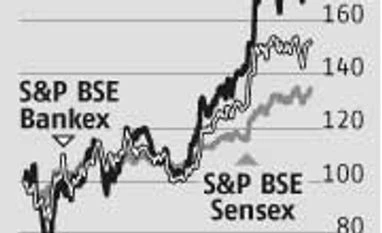
Malini Bhupta Mumbai Axis Bank’s stock price has run up 70 per cent in the past six months (against Sensex’s 22 per cent rise) but given its June quarter numbers, the run-up might not be over. Investors are worried about stressed asset accumulation in FY15 but the bank has reported lower-than-expected accretion of non-performing loans.
It had forecast stressed asset accumulation of Rs 6,500 crore in FY15, which implies slippages and loan recast of over Rs 1,500 crore every quarter. In the first quarter, Axis Bank reported slippages of Rs 626 crore and restructured loans of Rs 480 crore. With stressed assets well below the estimated Rs 1,500 crore, analysts believe the amount might be lower than estimated.
The accumulation of stressed assets tends to be higher in the first quarter, due to delinquencies in the retail and farm segments. In Q1 of FY14, Axis had added stressed assets of Rs 681 crore,nearly a third of the entire year’s accumulation. While the bank has retained its gross non-performing asset guidance of Rs 6,500 crore, analysts believe if the quarterly run-up stays below Rs 1,500 crore, it would boost the stock’s performance.
Other than the stressed asset accumulation, there are other aspects to the quarterly numbers that have gone down well with analysts. The bank’s focus on growing the deposit franchise is working well for the bank. Savings bank deposits have risen by 18 per cent year-on-year (y-o-y) during the quarter, while retail term deposits grew 44 per cent y-o-y. Domestic current account savings account (Casa) and retail term deposits now constitute 80 per cent of the total domestic deposits. Daily average Casa for Q1 of FY15 constitute 40 per cent of total deposits.
Analysts believe the bank is well capitalised and can absorb higher growth. Under Basel-III, the total capital adequacy ratio is 16.09 per cent and tier-I capital adequacy ratio is 12.64 per cent. The bank expects its loan growth to be 20 per cent higher than the industry growth and the comfortable capital position will aid this.
Analysts believe the bank’s 18 per cent y-o-y earnings growth during the June quarter could improve if the economy picks up and stressed loan accumulation is lower than forecast. The bank trades at 1.9x its FY16 adjusted book value, which is expensive.
However, according to Bloomberg data, 53 of 70 analysts tracking the stock have a ‘buy’ rating on the stock.

 "Axis Bank's slippages, loan recast below estimates")


 Connect with us on WhatsApp