Big tech firms and political risk

Technology firms fear govt regulation and need to mould public opinion to protect themselves
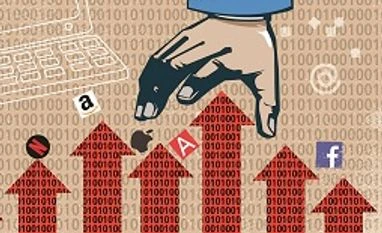
Illustration by Ajay Mohanty
Akash Prakash
Last Updated : Aug 07 2017 | 10:46 PM IST
One of the biggest challenges facing any fund manager today is what to do with technology behemoths when constructing portfolios. When running a global portfolio you cannot avoid Facebook, Apple, Alphabet, Amazon and Netflix (FAAAN). For an EM investor the same applies to Tencent and Alibaba.

Without these stocks in your portfolio you were doomed to underperform. Over the last decade a basket of the FAAAN stocks was up more than 50 times compared to the S&P 500, which slightly more than doubled.

However if you look at the dominance of these stocks today one should be worried. The top five companies globally by market capitalisation are all US tech behemoths. Seven of the top 10 today are technology companies. 

Historically such over-representation of a theme or sector has not ended well. In 1980, with inflation in double digits and belief in commodity shortages, six of the top 10 companies were oil producers and energy stocks were more than 30 per cent of the benchmark. Energy stocks were big underperformers in the subsequent decade. In 1990, the world was fascinated by Japan. Eight of the top 10 companies were Japanese, and Japan was 45 per cent of the MSCI world index (larger weightage than US). Japan has been a serial underperformer since then. In 2000, we had the TMT (tech, media, telecom) bubble. TMT stocks were seven of the top 10 globally and these sectors made up more than 30 per cent of the relevant benchmarks, again huge underperformance ensued for most of the decade. In 2010, it was China and China related plays, they made up six of the top 10 stocks, again a theme that has not worked. 

Given the above pattern, it should be quite straight forward. Just underweight the global technology behemoths and enjoy outperformance over the coming decade. If it were only that simple! Beyond the inconvenient truth that tech is driving most of today’s outperformance, these companies have some differences with past examples.

Illustration by Ajay Mohanty
Most of the technology giants of today are consumer franchises and based on network effects. They are able to provide services at zero marginal cost to a very sticky and loyal customer base. Once you are on iOS, with all your apps and media it is very unlikely you will shift. Similarly once hooked to Amazon Prime, why will you move? These network businesses are very difficult to dislodge and enjoy rising economies of scale. They get better and provide even more value to their consumers the bigger they are. They are cash flow machines, which will never raise capital. They have become almost monopoly-like in their competitive position. A monopoly not constrained by size or regulation is an incredibly powerful business. A business which is justifiably worth a premium valuation.

With the exception of Amazon, the valuation of these tech giants is not ludicrous. Apple, trades at less than 16 times earnings, stripped of its excess cash. Alibaba, Tencent and Facebook, all trade at a PEG (price/earnings to growth) ratio of between 1 and 1.3. While the absolute market capitalisation of these companies is high, it is not out of line with the growth and profitability. A protected, high growth, global cash flow stream is incredibly valuable in today’s low growth, low inflation macro backdrop.

Given the quality of these business models, their global opportunity, monopoly-like competitive position, and understandable valuation premium, one hesitates to exit these tech giants. 

They will eventually also underperform but for different reasons.

The two big risks they face to my mind are technology disruption and government regulation.

On technology disruption, as said before it is very tough to dislodge a network business, especially one which has the resources to very quickly copy any new technological or business model innovation. All the tech giants are investing massively in the new technology frontiers of AI, cloud, autonomous driving, IOT, etc.

As for regulatory risk, it is clear and visible. Some observers go so far as to suggest that the tech giants are today’s equivalent of Standard Oil (US oil company which was broken up in 1911 by US regulators, due to monopolistic concerns and was the parent of Exxon, Mobil, Chevron and Amoco. Its abuse of power led to the concept of antitrust regulations).

Already in Europe we see signs of regulatory backlash. The fines on Google for abusing its search results. The $14-billion Irish tax case against Apple and the recent fines against Facebook/WhatsApp. In China the regulator has forced Tencent to regulate time spent on certain games. Even Donald Trump has started murmuring against Amazon. Could this all escalate? 

The one thing going in favour of the tech giants is their continued popularity with the common people. These companies are still perceived as lowering prices of goods and making life easier. They are seen as improving living standards and not abusing their monopolistic position. Nobody is calling Mr Bezos, Mr Page or Mr Zuckerberg a robber baron. No one thinks Alphabet or Amazon is a vampire squid sucking profits out of common folk. Unlike Standard Oil or US Steel in the early 20th century or the banks a decade ago, there is no popular outcry to keep technology companies in check today. 

However this is today, things can change. The technology giants need to be hyper-sensitive to public sentiment. Public opinion cannot be allowed to turn against them. Given their power, wealth and size, governments will be only too happy to come down hard on these giants. Given the criticality of moulding public opinion and driving the public policy agenda, is it any surprise that many of the technology titans are now buying into influential newspapers and magazines. Washington Post, South China Morning Post and The Atlantic are just some known examples. Altruism combined with protecting the core. Makes sense, expect more such investments going forward. The only thing these companies fear is government regulation. Their main risk is political. They will become more active in moulding public opinion. It is a business necessity.
 
The writer is at Amansa Capital. These views are his own

One subscription. Two world-class reads.

Already subscribed? Log in

Subscribe to read the full story →
*Subscribe to Business Standard digital and get complimentary access to The New York Times

Smart Quarterly

₹900

3 Months

₹300/Month

SAVE 25%

Smart Essential

₹2,700

1 Year

₹225/Month

SAVE 46%
*Complimentary New York Times access for the 2nd year will be given after 12 months

Super Saver

₹3,900

2 Years

₹162/Month

Subscribe

Renews automatically, cancel anytime

Here’s what’s included in our digital subscription plans

Exclusive premium stories online

  • Over 30 premium stories daily, handpicked by our editors

Complimentary Access to The New York Times

  • News, Games, Cooking, Audio, Wirecutter & The Athletic

Business Standard Epaper

  • Digital replica of our daily newspaper — with options to read, save, and share

Curated Newsletters

  • Insights on markets, finance, politics, tech, and more delivered to your inbox

Market Analysis & Investment Insights

  • In-depth market analysis & insights with access to The Smart Investor

Archives

  • Repository of articles and publications dating back to 1997

Ad-free Reading

  • Uninterrupted reading experience with no advertisements

Seamless Access Across All Devices

  • Access Business Standard across devices — mobile, tablet, or PC, via web or app

More From This Section

Disclaimer: These are personal views of the writer. They do not necessarily reflect the opinion of www.business-standard.com or the Business Standard newspaper
Next Story



