With Chief Justice Ranjan Gogoi setting the date of October 18 to conclude the hearing on the nine-year-old Babri Masjid-Ram Janambhoomi case, an end to a controversy that has been at the root of India’s debilitating polarisation is finally in sight. With the prospect of a judgment by the five-judge bench in mid-November, before Justice Gogoi retires, Indians could earn respite from the unending uncertainty over an issue that is out of sync with the aspirations of a modern nation-state. The case, involving a 70-year-old land title dispute, has proved so contentious after the 1992 demolition of the mosque by Hindu devotees, that it has covered the terms of no less than four chief justices (Justice Gogoi being the fourth). It came to the apex court in 2010 as appeals by the Akhil Bharatiya Hindu Mahasabha (ABHM) and the Sunni Waqf Board against an Allahabad High Court judgment. The ABHM and the Waqf Board are two of the three entities that were awarded one-third each of the disputed territory (the Nirmohi Akhara, as ascetic sector, was the third awardee) by the high court, which appeared to have based its judgment on unprovable myth. Much water has flowed down Ayodhya’s Saryu River since, with the building of a temple over the site of the demolished mosque becoming the basis of the Bharatiya Janata Party’s election manifesto. Meanwhile, the case acquired a life of its own with multiple interveners (including maverick politician Subramanian Swamy), threats against lawyers, and a (failed) high-profile mediation effort that included the lifestyle guru Shri Shri Ravishankar.
Justice Deepak Misra, the previous chief justice, partially cleared the way for his successor by declining to refer to a larger Bench a point of law over whether a mosque is integral to Islam or not — a 1994 Supreme Court judgment had declared it was not. Given the febrile atmosphere ahead of the 2019 parliamentary elections, further hearings were suspended till after the polls. Under Justice Gogoi, it is fair to say the Supreme Court’s three-judge Bench hearing the case has proceeded with business-like speed. After declaring on August 3 that the mediation efforts had failed, the Supreme Court began daily hearings on August 6. The Supreme Court is uniquely placed to make a strictly legal judgment on this festering issue based on the principle of equality of religions as enshrined in Article 14 of the Constitution.
The critical point in all this, of course, will be the response of the executive. There can be no doubt that starting with the decision by a Congress government to not appeal a fateful district court judgment to open the disputed site (locked by the government since 1949) to inadequate security arrangements when kar sevaks gathered in Ayodhya to demolish the mosque to serial communal riots, successive political executives have failed to ensure law and order. It is imperative that irrespective of its agenda, the current regime should now listen to what the Supreme Court says. In a statement on Wednesday to a local language newspaper, Home Minister Amit Shah has said that everyone would have to accept the court’s verdict. That, for the moment, should be considered a sign of hope.

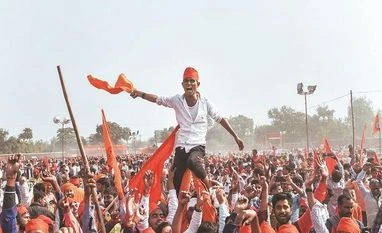 "Closure for Ayodhya")












 Connect with us on WhatsApp