The Income Tax Act, 1961, the Consumer Protection (Amendment) Act, 2002, Companies Act 2013 and the Mines and Minerals (Development and Regulation) Act, 2015 throw up several instances of badly drafted laws hurting their respective sectors, something akin to a tail wagging the dog. Yet, the country’s executive and legislature don’t seem to have learnt much from these mistakes, leaving the judiciary to wield the broom to clean the mess. Experts point to numerous inefficiencies in the long-drawn process of drafting laws.
The pain of drafting Legislative drafting is a joint process of the administrative ministry and the Ministry of Law. The initial formulation is usually prepared in the ministry, based on domain knowledge. “It is generally done by the person most familiar with the law on the subject — usually the joint secretary who has the perspective,” says former Union mines secretary S Vijay Kumar, who also served as joint secretary of Rajya Sabha. Sometimes, when the issue is complex, instead of drafting the Bill, a Cabinet note is first made, so as to obtain the views of all the ministries concerned.
In this process, which usually takes years, a Bill gets the approval of the law ministry and the other ministries concerned, the Union Cabinet, the parliamentary standing committee or joint parliamentary committee, and the Lok Sabha and Rajya Sabha.
Government officials familiar with the process say most Bills are drafted in a hurry. Consequently, there is inadequate consultation with stakeholders, improper initial formulation due to sparse knowledge and insufficient examination by the law ministry. Generally, the primary drafting is carried out by a junior officer (below the post of joint secretary), without proper supervision.
“The joint secretary is the crucial level. The government is bringing people without knowledge and experience to senior levels, resulting in poor drafts.” says a former senior government official.
However, former Union law secretary T K Viswanathan says the officer making the draft can’t be solely held responsible for the flaws. “The main reason for complexity in drafting is the fact that the legislative draftsmen are trying to simultaneously communicate with different types of audiences. This includes the ministry concerned, the legislators, the judiciary, the officials who enforce the the legislation, and finally, the common man,” says Viswanathan. The drafting officer has to satisfy conflicting demands. “One of the better ways to reduce court cases is ensuring clarity and preciseness in drafting,” says Joy Basu, senior advocate in the Supreme Court.
Enhancing quality To reduce drafting-related errors, the government should have a dedicated ‘drafting committee’ comprising retired judges, consultants, lawyers, attached to each ministry, Basu suggests.
Moreover, experts say the primary drafting process shouldn’t be hurried; adequate time must be given to all ministries concerned. “Give time to (other) ministries to react to the draft Bill, and have inter-ministerial meetings if necessary, rather than summarily taking a half-baked proposal straight to the Cabinet just to do things quickly,” says the former government official quoted earlier.
Additionally, the government’s tendency to swiftly bring about an ordinance, often bypassing the process of getting a Bill analysed by department parliamentary standing committees (DPSCs), is perpetuating a tendency to produce a hurried drafted Bill, feel many officials.
Once a Bill is introduced in Parliament, it is available in the public domain. Each House of Parliament has a ‘Bills section’, which scrutinises the various provisions. Errors can be detected and corrected at this stage. “But Parliament’s Bills section is grossly understaffed. At times, a single officer has to be attached to two-three parliamentary committees,” says Viswanathan.
He adds DPSCs, which have the power to recommend changes in the law, should have a dedicated member from the Bills section to ensure certain quality in drafting of a Bill.
Finally, most legislators are unfamiliar with the drafting process, evident from the drop in the number of private member Bills being brought up and the legislative time assigned for discussion. “It is clear that more legislative time needs to be devoted for consideration and passing of Bills in Parliament,” Viswanathan says.
| WHEN AMBIGUITY STRIKES |
COMPANIES ACT, 2013
Instance of ambiguous provision: If a company enters into a transaction which is in its 'ordinary course of business' and at 'arm's length basis', then such a transaction won't be termed as 'related party transaction' (RPT). Consequently, such transactions need follow the strict rules assigned for RPTs. (section 188)
Impact: - No definition or guideline given for 'arm's length basis' or 'ordinary course of business'
- Likely to create problems for companies later. For example, a minority investor can drag a company to court terming any transaction not being at 'arm's length basis'
NEGOTIABLE INSTRUMENTS ACT, 1881
|
Instance of ambiguous provision: "If the person committing an offence under section 138 is a company, every person who, at the time the offence was committed, was in charge of, and was responsible to, the company for the conduct of the business of the company, as well as the company, shall be deemed to be guilty of the offence and shall be liable to be proceeded against and punished accordingly" (section 141)
Impact: - Section 138 of this Act pertains to the criminal offence of a cheque not getting honoured due to company's fault
- The provision is not clear as to who should exactly be held accountable for such offence. As a result there have been numerous cases where the lower court terms the whole board of directors of a company as accountable, and involves them in daily criminal proceedings
Supreme Court in a recent judgement said that the board can't be held accountable for dishonour of one cheque RIGHT TO INFORMATION ACT, 2005 Instance of ambiguous provision: "The provisions of this Act shall have effect notwithstanding anything inconsistent therewith contained in the Official Secrets Act, 1923 (19 of 1923), and any other law for the time being in force or in any instrument having effect by virtue of any law other than this Act." (section 22)
Impact: - "This provision does not give a clear-cut superintendence over provisions of all other legislations providing information dispensation
- This has led to a lot of applications seeking information under the RTI Act being dismissed
CONSUMER PROTECTION ACT, 1986 Instance of ambiguous provision: The definition of 'consumer' was amended in 2002 to exclude people who obtain goods or avails of services for 'commercial purpose'. An explanation was added which excludes certain cases from the ambit of 'commercial purpose'. But the phrase itself was not precisely defined. (section 2)
Impact: - Every litigation on general insurance before a consumer court starts off with an argument by the insurance company that it is for commercial purpose and therefore the insured is not a consumer, and that the court does not have jurisdiction

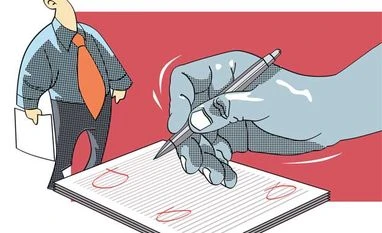 "Dealing with poorly drafted laws")


 Connect with us on WhatsApp