In a recent judgment dismissing the Competition Commission of India’s (CCI) plea to probe three telecom companies for anti-competitive practices, the Supreme Court may also have laid down the principles for avoiding jurisdictional skirmishes that happen between a sector regulator and the CCI.
The top court last week upheld a Bombay High Court order quashing a CCI probe into allegations of cartelisation by Bharti Airtel, Vodafone India and Idea Cellular.
Giving the upper hand to the sector regulator, Telecom Regulatory Authority of India (Trai), the apex court agreed with the high court’s view that “till the jurisdictional issues are straightened and answered by Trai, which would bring on record findings on the aforesaid aspects, the CCI is ill-equipped to proceed in the matter”. Many competition law experts felt that though the top court order did not attempt to cut the CCI down to size or diminish its powers in any way, it laid down the jurisdictional boundaries between the regulators. Going forward, the observations of the court could provide guidance for similar situations where two or more regulators enter jurisdictional conflicts, experts said.
The judgment, however, also clearly lays down that a sector regulator such as Trai does not have exclusive jurisdiction when it comes to probing anti-competitive practices in its specific market. It granted the CCI the right to probe if there is any evidence of the incumbent players having reached some sort of agreement to block a new entrant.
“The matter cannot be examined by looking into the provisions of the Trai Act alone. It is also imperative that specific purpose behind the Competition Act is kept in mind. The CCI, therefore, is to determine whether the conduct of the parties was unilateral or it was a collective action based on an agreement,” the top court had said in its judgment.
In the case under scrutiny, the Supreme Court had said it was important for the CCI to see if the then incumbent telecom players had come to a common agreement to block the entry of the new entrant, Reliance Jio Infocomm.
“Agreement between the parties, if it was there, is pivotal to the issue. Such an exercise has to be necessarily undertaken by the CCI,” the SC stated.
The judgment, though, could be a lesson for the CCI to wait for the sector-specific regulatory authority to come to a conclusion and submit its findings. This will also avoid the risk of conflicting findings by two authorities, Pathak added.
The top court’s observations asking the CCI to wait until the sector-specific authority completes its probe could, however, erode its powers to investigate cases of anti-competitive activities in a regulated market, noted Vinod Kumar Dhall, former acting chairperson of the CCI. “In a regulated market, there is potential for the industry to rely on the Court’s observations to engage in prolonged litigation.”
The silver lining here is that CCI and the sector regulator would start respecting each other’s domain expertise and roles assigned to them under their statutes, former CCI Chairperson Dhanendra Kumar said.
“It puts the entire matter in a clear jurisdictional perspective, without belittling the role of either of the two regulators,” Kumar said.
Amitabh Kumar, partner, J Sagar Associates (JSA), agrees with the view. “The CCI's jurisdiction has not been ousted in matters involving sectors that are regulated by a sector-specific regulator. It has to do with the kind of dispute and the issues that arise out of it,” he said.
The apex court’s thinking in this matter is clear-cut “If the sectoral regulator is better equipped to handle sector-specific technical issues, it must first look at the issues,” said Kumar of JSA.
By drawing a clear line between the jurisdictional reach of sector-specific regulators and the CCI, the apex court has also cut down on the possibility of forum shopping by litigants, experts said. Lawyers noted that complainants prefer to approach the CCI with their grievances as it is usually faster than other regulators.
For instance, there have been several cases where aggrieved homebuyers have approached the CCI even when the matters pertain to breach of contract terms, which the courts are more than competent to handle.
The judgment, however, leaves open the question of which forum should a consumer approach if the aggressor is the only dominant player in the market, as opposed to two or three players coming to an agreement to manipulate conditions, experts said.
JSA’s Kumar pointed out that sector regulators have to be aware of the provisions in the Competition Act. “There has been grudging use of these provisions. Turf wars must be avoided at all cost as these are inimical to consumer welfare — a declared or undeclared objective of all regulatory laws,” he added.

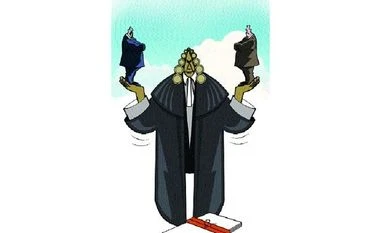 "How SC order draws the line between Trai and CCI, helps avoid turf war")












 Connect with us on WhatsApp