
In Bollywood-crazy India, fusion musicians sing success tune
Segment is growing rapidly, constituting over half of Rs 1,000 cr non-film music market in country
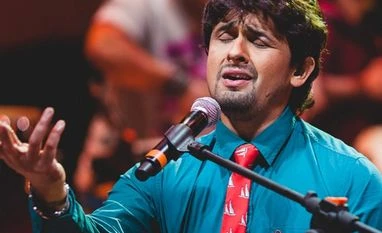 "In Bollywood-crazy India, fusion musicians sing success tune")
premium
WebinarsNew
Deep DiveNew
Explore Business Standard
Segment is growing rapidly, constituting over half of Rs 1,000 cr non-film music market in country
It is not uncommon these days for Bollywood singer Sonu Nigam to grace fusion music concerts in Mumbai. An accomplished singer, Nigam has been seen at quite a few of them in the last few months.
Nigam isn't alone in making a beeline for these shows. Ghazal and pop singer Hariharan, jazz artiste Louis Banks and Shankar Mahadevan of the popular composer trio Shankar-Ehsaan-Loy are all over the fusion music circuit these days. Concerts by these artistes are a regular affair across metros and mini-metros in the country.
The interest of mainstream artistes in fusion music is due to growth. In Bollywood-crazy India, the needle, say experts, is gradually shifting to non-film music. This is resulting in house-full shows and better remuneration for fusion music artistes.
Of the Rs 1,000-crore non-film music market in India, over half is the fusion music segment. The market, say experts, is likely to cross the 60 per cent mark in the next few years as the segment becomes popular with the youth.
"Fusion music has seen a 25 per cent year-on-year growth in terms of value in 2016. This could accelerate in the coming years as the genre becomes popular," says Ratish Tagde, founder and executive chairman of InSync, India's only classical music channel. "Unlike earlier, companies are willing to sponsor shows today and ticket sales are also smooth," he adds.
While Tagde declined comment on whether he was contemplating launching a fusion music channel, experts say it could become a trend.
"So far one has seen music channels revolving around popular Hindi, English and regional music. But as fusion music evolves, mainstream music channels could consider devoting programming time to this genre," says Jehil Thakkar, partner and head, media and entertainment, KPMG India.
Apart from Bollywood, pop, jazz and ghazal singers, classical musicians, too, are eying the fusion segment.
"Fusion allows artists to experiment and create something new. This brings variety to the listener," says Niladri Kumar, an Indian classical and fusion musician. Kumar's positioning is apt, where he plays the sitar in classical concerts and the electric sitar in fusion concerts.
Event organisers, too, are a happy lot. Says Mazhar Nadiadwala, managing director, Dome Entertainment, "There has been a clear shift from electronic, dance and Bollywood music to contemporary fusion music. In many respects, this has happened because tastes have evolved. The result is that venues such as ours -- Dome at the National Sports Club of India (Mumbai) -- is able to do brisk business on the back of these concerts."
According to industry estimates, organising a fusion concert costs around Rs 1.5 lakh depending on the venue. While artiste fees have jumped almost two-fold in the last few years, ticket prices have also increased by 30-40 per cent in keeping with demand. Nadiadwala says ticket prices could continue to rise as listeners crave fusion music. Variety is indeed becoming the spice of life.
Already subscribed? Log in
Subscribe to read the full story →

3 Months
₹300/Month
1 Year
₹225/Month
2 Years
₹162/Month
Renews automatically, cancel anytime

Premium stories handpicked daily by our editors


News, Games, Cooking, Audio, Wirecutter & The Athletic
Digital replica of our daily newspaper — with options to read, save, and share


Insights on markets, finance, politics, tech, and more delivered to your inbox
In-depth market analysis & insights with access to The Smart Investor


Repository of articles and publications dating back to 1997
Uninterrupted reading experience with no advertisements


Access Business Standard across devices — mobile, tablet, or PC, via web or app
First Published: Jan 07 2017 | 11:53 PM IST


 Connect with us on WhatsApp