Jobs for locals

Haryana Ordinance will hurt workers and investment
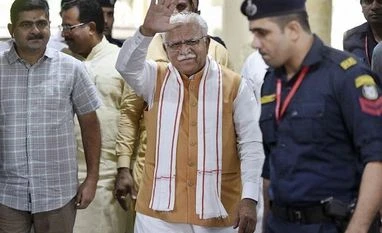
Manohar Lal Khattar
Haryana Chief Minister Manohar Lal on his arrival at Haryana Bhawan in New Delhi, Friday, Oct. 25, 2019 | Photo: PTI
Business Standard Editorial Comment
3 min read Last Updated : Jul 09 2020 | 12:05 AM IST
On Monday, the Haryana cabinet approved a proposal to draft an Ordinance that would reserve jobs for “locals” in the private sector. The Haryana State Employment of Local Candidates Ordinance, 2020, is to provide a whopping 75 per cent reservation for locals in new jobs within the state in private concerns, subject to certain riders. These include that the new jobs should have a salary of under Rs 50,000; and that the company itself should have more than 10 people. The coalition government in power in the state, although led by the Bharatiya Janata Party Chief Minister Manohar Lal Khattar, also includes the Jannayak Janta Party of the Deputy Chief Minister, Dushyant Chautala, and job reservations for locals has long been a demand of the party. 

This is part of a worrying trend. India’s development is regionally unbalanced, as is the case with all large developing countries. The natural operation of economic growth, which creates clusters of fast development and takes advantage of returns to scale, tends to ensure that jobs are created in specific advantaged parts of the country. In order to share the benefits of this development, those jobs must similarly benefit those from all over the country. Thus, internal migration for jobs in the urban sector has long been central to the notion of development. In India, too, internal migration has taken hold in recent decades. Many individuals leave the states in which they were born in order to find employment elsewhere. For labour surplus states like Uttar Pradesh and Bihar, this is sometimes the central way in which they get to participate in India’s growth story. Discrimination against migrants in jobs creates problems for the development process, and not incidentally leads to political ill-feeling. 

It is also bad for investors. If nothing else, this is now an additional form of paperwork and compliance being imposed upon job creators in Haryana at a time when private investment is at a low and the virus and the lockdown have devastated India’s economy. A government concerned about the ease of doing business, as Haryana’s has claimed to be in the past, should not have put such an onerous and unnecessary additional criterion on potential investment into the state. Corporations that might have chosen headquarters in Gurugram will now think twice. The deputy chief minister warned that the new Ordinance “would have the toughest rules as those industries or units that hide the information about the employees, would face severe consequences”. These would include hefty financial penalties and daily fines. For investors, such a well-publicised, intrusive, emotive, and politically-sensitive new regulation might well prove to be a deal-breaker. Further, there are the ripple effects to be considered. Today it is Haryana — tomorrow it may be Maharashtra or Tamil Nadu. Karnataka has already made noises to this effect. India’s labour market cannot be balkanised in this manner, and the rights of its workers cannot be circumscribed. This is not China, where internal migration is subject to the will of an authoritarian state. Such a sensitive inter-state matter must be taken up at the level of the Union of India — through an appropriate federal intervention, such as an inter-state council.

One subscription. Two world-class reads.

Already subscribed? Log in

Subscribe to read the full story →
*Subscribe to Business Standard digital and get complimentary access to The New York Times

Smart Quarterly

₹900

3 Months

₹300/Month

SAVE 25%

Smart Essential

₹2,700

1 Year

₹225/Month

SAVE 46%
*Complimentary New York Times access for the 2nd year will be given after 12 months

Super Saver

₹3,900

2 Years

₹162/Month

Subscribe

Renews automatically, cancel anytime

Here’s what’s included in our digital subscription plans

Exclusive premium stories online

  • Over 30 premium stories daily, handpicked by our editors

Complimentary Access to The New York Times

  • News, Games, Cooking, Audio, Wirecutter & The Athletic

Business Standard Epaper

  • Digital replica of our daily newspaper — with options to read, save, and share

Curated Newsletters

  • Insights on markets, finance, politics, tech, and more delivered to your inbox

Market Analysis & Investment Insights

  • In-depth market analysis & insights with access to The Smart Investor

Archives

  • Repository of articles and publications dating back to 1997

Ad-free Reading

  • Uninterrupted reading experience with no advertisements

Seamless Access Across All Devices

  • Access Business Standard across devices — mobile, tablet, or PC, via web or app

Topics :Haryana GovernmentManohar Lal KhattarBharatiya Janata Party BJPDushyant chautala

Next Story



