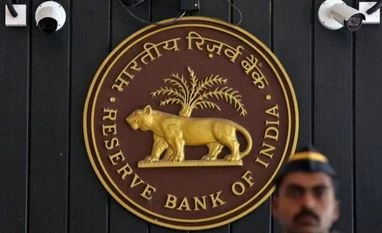
The Monetary Policy Committee (MPC) of the Reserve Bank of India (RBI) faces two contrasting challenges as it meets for the bi-monthly policy review. The prevailing domestic cues suggest that measures to increase liquidity are in order. Domestic bond markets have been hit by a liquidity crisis triggered by the IL&FS defaults. This has resulted in bond yields shooting up. The RBI must also consider the overhang of the central government's scheduled borrowing programme for the second half of the 2018-19 fiscal year that will suck out Rs 2.5 trillion from the system. Meanwhile, retail inflation is moderate, with the August print of 3.7 per cent well below the RBI's targeted level of four per cent. This, in turn, would suggest an accommodative stance in order to ensure ample credit availability. Indeed, the RBI has already announced that it would be embarking on its own version of quantitative easing — buying bonds in order to inject liquidity via what it terms as open market operations (OMOs). The central government has also stated it would curtail its own borrowing programme by Rs 700 billion, which will reduce the crowding out of private sector’s borrowing needs.
Yet, on the other hand, global conditions would predicate a hike in interest rates to defend the beleaguered national currency. The rupee has been plunging and could drop further due to the stance of the United States Federal Reserve (or Fed) and the European Central Bank (ECB). The Fed is committed to a regime of rate hikes, and “quantitative tightening” as it downsizes its balance sheet by selling off its bond portfolio. The ECB is committed to tapering off its bond-buying programme by December. This will mean a rise in hard-currency yields. That could induce portfolio investors to shift out of emerging-market assets. Foreign portfolio investors (FPIs) sold over Rs 210 billion in Indian assets during September. The RBI has already spent over $30 billion defending the rupee in the past six months, as the current account deficit has widened along with rising crude prices. If the interest rate differential between hard currencies and the rupee narrows, there could be further FPI selling. In addition, substantial overseas debt servicing obligations amounting to around $200 billion in the next 12 months will mean an inevitable drain of foreign reserves. There is also the fear of inflation trending up as imports become expensive. Apart from the impact of expensive fuels, costs of other raw material (plastics, petrochemicals, electronic components, metals) have already risen substantially across many sectors.
In sum, the MPC would be hard-pressed not to raise interest rates in order to maintain the interest rate differential with the dollar and the rupee at the current levels. Of course, it is arguable whether a 25 or even 50 basis point increase will dramatically alter the course of events. Moreover, such a decision — combining quantitative easing via OMOs with higher policy rates — would seem paradoxical. But that only brings out the strange dilemma facing the MPC — it would be increasing both the supply of money as well as its price. Still, this could arguably be the best option available to the RBI. That’s because the global trend is likely to be more long-term in nature than the current liquidity crisis in the Indian markets.
*Subscribe to Business Standard digital and get complimentary access to The New York TimesSubscribeRenews automatically, cancel anytime
Here’s what’s included in our digital subscription plans
Exclusive premium stories online
Complimentary Access to The New York Times

News, Games, Cooking, Audio, Wirecutter & The Athletic
Curated Newsletters

Insights on markets, finance, politics, tech, and more delivered to your inbox
Market Analysis & Investment Insights
Seamless Access Across All Devices