Outlook subdued for United Spirits
Concerns persist on volume growth due to liquor bans in states
Ujjval Jauhari New Delhi
As the liquor bans in states start impacting Street sentiment, the lower-than-expected March quarter performance by United Spirits (USL) added to the woes.
During the March’16 quarter, net revenues were up 12 per cent year-on-year, but fell 14 per cent sequentially to Rs 2,290 crore. But, excluding the Rs 237 crore contribution of Diageo brands, revenues growth was flat y-o-y, say analysts.
Further, earnings before interest, taxes, depreciation and amortisation margins at a meagre four per cent were lower than the 10 per cent expected by the Street. These were impacted by accounting re-classification (1.6 percentage points), one-off items, provisions (2.2 percentage points), and increased marketing investment (2.1 percentage points). Excluding these, the margins were a tad short of estimates. In this backdrop, USL ended with a net loss of Rs 9 crore in the March quarter.
What’s worse, volumes were down nine per cent sequentially and four per cent y-o-y to 23.3 million cases. Most of the decline was due to the popular segment volumes shrinking to 15.2 million cases, down six per cent sequentially and 10 percent y-o-y. Prestige and above segment, the company’s key focus area, grew nine per cent y-o-y (though down 16 per cent sequentially) to 8.1 million cases. Given the relatively higher product value in this segment, an increase in volumes, doesn’t seem to have reflected in margins.
The company continues its efforts on growing the prestige segment and re-launched three brands in FY16. After Royal Challenge, USL re-launched McDowell’s No 1 (75 per cent of prestige segment sales) in the December’15 quarter and Signature in the March’16 quarter. According to the management, early signs of re-launches are encouraging and would reap benefits in FY17.
On the positive side, USL has taken price hikes in Karnataka, which accounts for 25 per cent of the company’s sales. Also, several initiatives are underway to improve working capital management, while USL also plans to cut debt by another Rs 1,000-2,000 crore by divesting non-core assets.
However, while the company has guided for mid-teen margins in the medium-term, analysts are not confident. Analysts at IIFL have cut FY17/18 estimates as they believe margin trajectory would take time to reach the levels pegged by management. Analysts at Motilal Oswal Securities also expect volatility in margins to continue in FY17. They have cut earnings estimates by 17-20 per cent to adjust for the margin miss, and build in lower volume and margin assumptions given the underlying subdued discretionary demand trends and USL’s focus on optimising product mix.
The concerns on volume with state liquor bans persist. Analyst at ICICI Securities say that following the recent ban initiation in Bihar in April and staggered ban in Kerala and Tamil Nadu, volumes would continue to be impacted. They believe the impact of the ban would be a concern in the near term, but the company being the market leader would benefit in the long run.
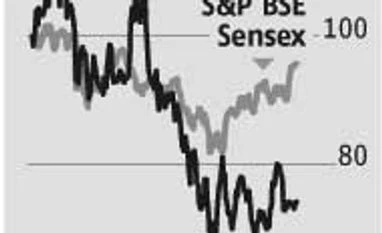
The stock, which has been under pressure since November 2015 (down 30 per cent), is currently trading at Rs 2,500 levels.

 "Outlook subdued for United Spirits")


 Connect with us on WhatsApp