
Patent to Pfizer could delay Indian vaccines for pneumonia
The vaccine, called PCV13 and marketed as Prevnar13, provides protection against 13 strains of streptococcus pneumoniae bacteria
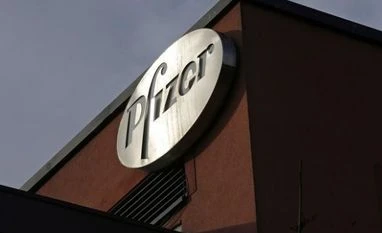 "Patent to Pfizer could delay Indian vaccines for pneumonia")
premium
WebinarsNew
Deep DiveNew
Explore Business Standard
The vaccine, called PCV13 and marketed as Prevnar13, provides protection against 13 strains of streptococcus pneumoniae bacteria
Pneumonia kills 200,000 children in India every year. The vaccine is available in the private market from two global pharma giants, Pfizer and GlaxoSmithKline (GSK).
Pfizer's vaccine, called PCV13 and marketed as Prevnar13, provides protection against 13 strains of the streptococcus pneumoniae bacteria. GSK's product can provide protection against 10 strains.
Four Indian companies - Serum Institute, Panacea Biotec, Biological E and Tergene Biotech - have pneumococcal conjugate vaccine (PCV) products in the pipeline, according to Sathguru Management Consultant, which had earlier this year made a report on the Indian vaccine market for the Confederation of Indian Industry (CII).
"Pfizer's patent doesn't cover a mechanism of action and is primarily on formulation of the product. All the four Indian companies with PCV candidates in the pipeline have different formulations and if any of them infringe any part of the granted patent, there could be a delay in launch of the product due to time for reformulation to ensure freedom to operate," says Pushpa Vijayaraghavan, director of Sathguru.
The patent office at Delhi granted one to Pfizer's PCV, which has been in the market for 10 years. It is priced Rs 11,400 for three doses. The vaccine also got introduced in the Universal Immunisation Programme (UIP) of the government in May in a phased manner, with the assistance of Gavi, the global vaccine alliance. It is currently implemented in three states. The alliance will be making these Pfizer vaccines available in India only for three years, following which government will have to buy it on its own.
"The implication could be potential delays and is unlikely to a complete commercialisation threat to any of the Indian candidates," says Vijayaraghavan. While Serum Institute and Panacea Biotec did not respond to e-mail queries, Biological E and Tergene Biotech could not be reached.
With demand for PCV increasing, GSK also aims to expand the market. "We have shown our interest to the government as it has chosen another brand for the rollout of pneumococcal vaccine under UIP. Our products are already used in many of our neighbouring countries as part of their national immunisation program. Once our brand is accepted for UIP, our vaccine volume will increase," says A Vaidheesh, managing director for GSK in India.
Sathguru estimates the Indian vaccine industry would grow to $3.1-3.3 billion by 2020, from $1-1.2 bn in 2015. This covers the domestic UIP, private channel and export markets. This would also include rapid growth for the private market, dominated by multinationals. This market is expected to grow to $1.9 bn by 2020 from $265 million in 2015, largely with PCV.
"Our business strategy continues to focus on growing our core pneumococcal business, through increasing access and awareness and enhancing the product portfolio," said a spokesperson at Pfizer. "We also hope to partner in the scale-up of the public immunisation program.
There are several vaccines such as PCV, HPV (Human Papilloma Virus), varicella (chicken pox) and Hepatitis A, that are only sold by multinationals in India, not made by Indian companies. They derive strength from their global research and development expertise and differentiated portfolio, and have often leveraged marketing partnerships with Indian pharma companies to gain market share.
French pharma giant Sanofi has a tenth of its global vaccine workforce in this country. With over a dozen wide-ranging vaccines in its portfolio, Sanofi Pasteur, its vaccine division, is amongst the top three vaccine companies in India and has a private market share of 11 per cent, according to IMS Health this June.
"Delivering upon a promising trend, our business in India has witnessed double-digit growth over the past two years," says Jean-Pierre Baylet, country head of Sanofi Pasteur South Asia.
Already subscribed? Log in
Subscribe to read the full story →

3 Months
₹300/Month
1 Year
₹225/Month
2 Years
₹162/Month
Renews automatically, cancel anytime

Premium stories handpicked daily by our editors


News, Games, Cooking, Audio, Wirecutter & The Athletic
Digital replica of our daily newspaper — with options to read, save, and share


Insights on markets, finance, politics, tech, and more delivered to your inbox
In-depth market analysis & insights with access to The Smart Investor


Repository of articles and publications dating back to 1997
Uninterrupted reading experience with no advertisements


Access Business Standard across devices — mobile, tablet, or PC, via web or app
First Published: Sep 11 2017 | 11:06 PM IST


 Connect with us on WhatsApp