Rescue plan for subordinate courts

Despite Supreme Court's efforts for decades, states do not provide them even basic infrastructure
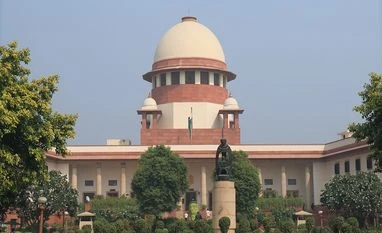
Rescue plan for subordinate courts
M J Antony
Last Updated : Aug 22 2018 | 1:08 AM IST
The woes of a litigant start when he or she knocks at the door of the lowest rung of the judiciary near his village or town. The high courts and the Supreme Court are far away and not ordinarily accessible due to distance and expenses. It is for this reason that the Supreme Court has been trying judicially for the past 30 years to improve the infrastructure of these courts. 

The result so far is disappointing. The verdict of the court earlier this month was: “The infrastructure in courts, especially in the interior parts of the country, is dying out. It would not be wrong to say that some of them are just on the ventilator.” Of 30 million cases pending, 80 per cent are in the district courts and below.
 
The main reason is the neglect of the governments to make adequate budgetary provisions for subordinate courts. Most states provide less than one per cent of the budget for judiciary. In this, the states follow the Union Budget model which traditionally makes the same meagre grant. Another reason for this distressing state of affairs is that the governments do not draw up a specific plan even to spend the meagre amount allotted to judiciary. The court pointed out that no democracy can afford to undermine the core values of rule of law which is intrinsically linked to access to justice.

The states have raised bureaucratic hurdles at each step suggested by the Supreme Court over the decades. The latest order is in the 279th application in a writ petition moved by the All India Judges’ Association in 1989. Seven years ago, the court had asked the state governments to reply to five specific questions, such as, why the infrastructure projects such as court buildings and residential quarters have not taken off, how long they were pending and why vacant government lands were not made available for court complexes. The states have been taking adjournments for years. When pressed they would provide a vague affidavit avoiding clear answers. This has prompted the court to ask some states like Gujarat, Uttarakhand and Maharashtra to file a “proper, detailed and accurate affidavit, project-wise and format-wise”. It looks like a battle of wits between the judges and the state law departments who draft affidavits.

Nevertheless, the ambition of the court soars above political lethargy. It has passed a 14-point programme on various aspects of infrastructure of the courts. The court development plan comprises short-term (annual), medium-term (five years) and long-term (10 years). Most of the demands are elementary: Model court buildings, furniture, fixture, judges’ chambers, record room, adequate sitting room for the staff and officers, waiting room for litigants and lawyers, clean and hygienic washrooms, CCTV, dispensary and video conference link to jails. The list exposes how these basic facilities are lacking in the subordinate courts.
The usual excuse of the executive is that it has financial limitations. In another judgment (Brij Mohan Lal vs Union of India), the court has rejected this plea stating that “financial constraints can hardly be justified to avoid performance of the constitutional duty of the government, especially when the human rights are concerned.”

Meanwhile, some suggestions of the Supreme Court to the courts below could be applied to itself. The congestion in the apex court premises has become so life-threatening that the Attorney General took up the issue with the judges last week. Lawyers cannot reach the well of the court because of crowd, and visitors, especially women, face the threat of falling amidst strolleys carrying case files in the corridor. The description of the district courts in the judgment aptly describes the situation in the Supreme Court itself: “Court premises must be armed with better crowd management arrangement… At the time of court proceedings the crowd management in the court premises runs into utter chaos.” 

Though the Supreme Court wants all courts to have adequate parking spaces, those who have to negotiate their way through the wrongly parked cars on roads around the apex court building would wish charity begins at home. Though the Chief Justice announced earlier this year that the court would be paperless, hectares of land which housed the Pragati Maidan have been taken over and multistoried constructions are coming up to accommodate tons of dog-eared files.

The court projects that when people become increasingly aware of their rights, there would be more rush at the courts’ doors. Some judges have calculated that it would take some 300 years to clear the pending cases. So the question is, what after the ventilator.
 

One subscription. Two world-class reads.

Already subscribed? Log in

Subscribe to read the full story →
*Subscribe to Business Standard digital and get complimentary access to The New York Times

Smart Quarterly

₹900

3 Months

₹300/Month

SAVE 25%

Smart Essential

₹2,700

1 Year

₹225/Month

SAVE 46%
*Complimentary New York Times access for the 2nd year will be given after 12 months

Super Saver

₹3,900

2 Years

₹162/Month

Subscribe

Renews automatically, cancel anytime

Here’s what’s included in our digital subscription plans

Exclusive premium stories online

  • Over 30 premium stories daily, handpicked by our editors

Complimentary Access to The New York Times

  • News, Games, Cooking, Audio, Wirecutter & The Athletic

Business Standard Epaper

  • Digital replica of our daily newspaper — with options to read, save, and share

Curated Newsletters

  • Insights on markets, finance, politics, tech, and more delivered to your inbox

Market Analysis & Investment Insights

  • In-depth market analysis & insights with access to The Smart Investor

Archives

  • Repository of articles and publications dating back to 1997

Ad-free Reading

  • Uninterrupted reading experience with no advertisements

Seamless Access Across All Devices

  • Access Business Standard across devices — mobile, tablet, or PC, via web or app

More From This Section

Disclaimer: These are personal views of the writer. They do not necessarily reflect the opinion of www.business-standard.com or the Business Standard newspaper
Next Story



