Seeds of discontent

The onus of bridging the trust deficit with farmers lies with the govt

Farmers protest
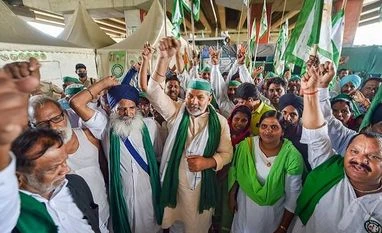
BKU spokesperson Rakesh Tikait and farmers raise slogans ahead of a protest march towards Parliament against three farm laws, at Ghazipur border in New Delhi, Wednesday, July 21, 2021. (PTI Photo)
Business Standard Editorial Comment Mumbai
3 min read Last Updated : Sep 07 2021 | 10:32 PM IST
The massive Mahapanchayat organised by the agitating farmers at Muzaffarnagar in Uttar Pradesh earlier this week to press their demands for repealing the three recently enacted farm laws has managed to send out some important messages. These, if heeded by the government, can help it to recast its strategy to deal with the contentious farm issues. For one, it has shown that the government’s game plan to tire out the agitating farmers is unlikely to succeed. The farm leaders, on the contrary, have announced plans to extend the movement to other parts of the country, beyond the north-western Jat belt. Moreover, it has shown that the prolonged impasse is not going to serve any purpose. The government is, indeed, the bigger loser as the existing communication gap is denying it the opportunity to capitalise on the many initiatives it has taken over the years for the welfare of the farmers. The fact that this government has hiked the minimum support prices (MSPs) of various farm goods much more sharply than in the past and that it has procured relatively high quantities of various farm products has been overshadowed by the negative propaganda.

Nevertheless, the Mahapanchayat has removed whatever doubts there were regarding the political contours of the farmers’ movement. The unmistakable indication to this effect came from none other than Bhartiya Kisan Union (BKU) leader Rakesh Tikait, who is spearheading this campaign. He minced no words in declaring that his supporters would oppose the ruling Bharatiya Janata Party in the next elections in Uttar Pradesh and Uttarakhand. The leaders of the other locally relevant political parties like the late Ajit Singh’s Rashtriya Lok Dal (RLD) and the Samajwadi Party (SP) did not show up on the dais but their support to the rally was evident. They set up camps to provide langar (free food) and other facilities to those in the rally. As a counter-measure, the ruling BJP announced the state government would soon increase the sugarcane price for the ensuing cane-crushing season. Notably, the bulk of the participants in the Mahapanchayat were the cane growers of western UP and adjoining areas. There is no doubt that the western UP belt with nearly 120 of the state’s 403 Assembly seats enjoys profound political significance.
 
Another point that cannot be disregarded is that there is a good deal of misinformation, spread by vested political interests, about the three farm laws which form the core cause of the current farm unrest. The contentious laws pertain chiefly to the sale and purchase of the farm produce outside the regulated mandis, contract farming, and the dilution of the Union government’s powers under the Essential Commodities Act to impose stockholding limits on the selected farm products. What is being overlooked is that many state governments have amended their state marketing laws to exempt several categories of agricultural products from the compulsion of being traded through recognised mandis. They are also encouraging direct linkages between the farmers and the end-users of their produce. Some states have regularised contract farming to guard the growers’ interests. A Central law, even if in the broader interests of the farmers, isn’t truly required for this purpose. Where some genuine flaws in these laws are concerned, the government has indicated its willingness to remove them. Rushing through the farm laws without much consultation was the government’s first mistake. The onus of bridging the trust deficit lies with the ruling party.    

One subscription. Two world-class reads.

Already subscribed? Log in

Subscribe to read the full story →
*Subscribe to Business Standard digital and get complimentary access to The New York Times

Smart Quarterly

₹900

3 Months

₹300/Month

SAVE 25%

Smart Essential

₹2,700

1 Year

₹225/Month

SAVE 46%
*Complimentary New York Times access for the 2nd year will be given after 12 months

Super Saver

₹3,900

2 Years

₹162/Month

Subscribe

Renews automatically, cancel anytime

Here’s what’s included in our digital subscription plans

Exclusive premium stories online

  • Over 30 premium stories daily, handpicked by our editors

Complimentary Access to The New York Times

  • News, Games, Cooking, Audio, Wirecutter & The Athletic

Business Standard Epaper

  • Digital replica of our daily newspaper — with options to read, save, and share

Curated Newsletters

  • Insights on markets, finance, politics, tech, and more delivered to your inbox

Market Analysis & Investment Insights

  • In-depth market analysis & insights with access to The Smart Investor

Archives

  • Repository of articles and publications dating back to 1997

Ad-free Reading

  • Uninterrupted reading experience with no advertisements

Seamless Access Across All Devices

  • Access Business Standard across devices — mobile, tablet, or PC, via web or app

Topics :Farm BillsFarmers protestsBusiness Standard Editorial Comment

Next Story