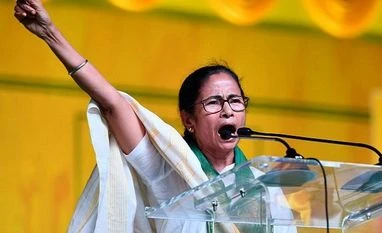
From her days as an opposition activist, West Bengal Chief Minister Mamata Banerjee has worn her reputation for unrelenting feistiness as a badge of honour. Against the tired, old men of the Left Front, her energetic defence of those who lost land to industrial projects propelled her to two terms in power. Against the juggernaut of grassroots mobilisation by the Bharatiya Janata Party (BJP) in the recent parliamentary elections, however, she has played into the hands of her opponents and has created conditions for communally-charged confrontation that the state has not seen since 1947. To be sure, violence has been the leitmotif of political engagement in West Bengal since the sixties. The nature of Left Front rule accentuated this; land redistribution policies, which kept it in power for over three decades, also created a powerful, disaffected class of land losers.
This incipient unrest, coupled with militant trade unionism, compelled business to take its capital elsewhere, making the state a case study on the perils of communist governance. In her eight years in power, Ms Banerjee has not changed this basic feature of local politics, and accentuated and reoriented it. Well-publicised investor summits and scouting trips to Singapore did nothing to allay investor fears about endemic violence. Instead, for no discernible reason, she chose to channel her politics to the Muslim community, which accounts for 27 per cent of the state’s population. This in itself was a dangerous route to choose when the wounds of Partition are still to heal; when she chose to appease the community’s more fundamentalist elements with subsidies the state could ill afford, she alienated those who saw in her a viable secular alternative to the Left Front.
At the same time, the absence of gainful employment opportunities drove the feckless youth, who once provided the muscle power for the Left Front, to divide their allegiance between the Trinamool Congress and the moneyed BJP. West Bengal, thus, became a battleground of competing political thuggery, and the elections saw an unprecedented level of violence and poll-related deaths. Instead of countering the BJP’s new-found strength with a cogent campaign as Naveen Patnaik did in neighbouring Odisha, Ms Banerjee escalated the violence, carrying matters to such absurd lengths as preventing BJP President Amit Shah from campaigning and attacking BJP workers, prompting the Election Commission to ban all campaigning 48 hours before the vote.

 "Stop the violence")












 Connect with us on WhatsApp