Over to banks now

New NPA resolution norms are finely balanced
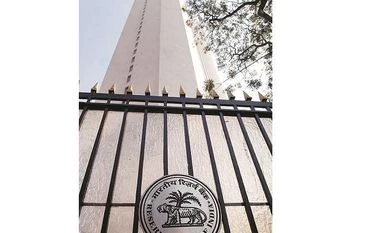
Lack of supervision It would have been much better if the RBI's central board had highlighted where the existing departments fell short and then suggested a remedy
Lack of supervision It would have been much better if the RBI’s central board had highlighted where the existing departments fell short and then suggested a remedy
Business Standard Editorial Comment
3 min read Last Updated : Jun 10 2019 | 12:20 AM IST
The Reserve Bank of India (RBI) has adopted a carrot-and-stick approach to the resolution of stressed assets. The new norms released last Friday have empowered banks to hammer out a resolution but have also put in place enough safeguards against any intent to evergreen stressed accounts. Lenders will be subject to stringent action, including higher provisioning and monetary penalties. Resolution plans shall provide for payment not less than the liquidation value due to dissenting lenders, the RBI said in its latest framework.

The most substantive change in the new stressed asset resolution norms two months after the Supreme Court struck down Mint Road’s February 12 circular is that banks now get a 30-day window to decide if an account is a non-performing asset (NPA) as distinct from the earlier one-day default norm, which was both harsh and impractical. The revised circular gives non-banking financial companies (NBFCs), small finance banks, Nabard, Exim Bank and Sidbi a place around the resolution table.

The idea is obviously to make sure that most cases should be settled within the new framework, with the Insolvency and Bankruptcy Code (IBC) being the last option. While lenders have to be proactive, the RBI will continue to direct banks to start insolvency proceedings for specific defaults. If anything, pressure has been increased on the banks, which have to mandatorily sign an inter-creditor agreement (ICA). The ICA will provide any decision agreed by lenders representing 75 per cent in terms of voting share or 60 per cent of them in terms of numbers. Banks will have to work double-quick around their internal bureaucracies to ink an ICA within a month of default.

Failure to see the resolution plan (RP) through will entail an additional 35 per cent in provisioning — 20 per cent if they can’t make it work within 180 days and an additional 15 per cent if no resolution is found within a year. The price to be paid by way of additional provisioning will be of worry for state-run banks, which have been recently capitalised and also the ones which continue to be under the RBI’s Prompt Corrective Action framework. But it is unlikely the more prudent banks will be unduly bothered on enhanced provisioning as they would have already done so for the entire exposure on their own.

While the central bank’s norms will apply to defaulters of Rs 2,000 crore immediately, the same for those between Rs 1,500 crore and less than Rs 2,000 crore will kick in only from January 1, 2020. Such a staggered approach has raised a few concerns among banks — visibility is poor as to how they are to proceed from here on in the cases of exposures of less than Rs 2,000 crore. Smaller banks in particular are worried on this aspect.

The thinking behind the revised circular is that the recognition of default or accounting for deterioration in the quality of assets should be independent of the reasons for such default or deterioration. The best part of the new norms is that they retain the spirit of the February 12 circular and offer a mechanism that will enable resolutions through requisite majority. The onus now is on banks to speed up resolution as the earlier circular impacted loans worth Rs 3.8 lakh crore across 70 large borrowers.

One subscription. Two world-class reads.

Already subscribed? Log in

Subscribe to read the full story →
*Subscribe to Business Standard digital and get complimentary access to The New York Times

Smart Quarterly

₹900

3 Months

₹300/Month

SAVE 25%

Smart Essential

₹2,700

1 Year

₹225/Month

SAVE 46%
*Complimentary New York Times access for the 2nd year will be given after 12 months

Super Saver

₹3,900

2 Years

₹162/Month

Subscribe

Renews automatically, cancel anytime

Here’s what’s included in our digital subscription plans

Exclusive premium stories online

  • Over 30 premium stories daily, handpicked by our editors

Complimentary Access to The New York Times

  • News, Games, Cooking, Audio, Wirecutter & The Athletic

Business Standard Epaper

  • Digital replica of our daily newspaper — with options to read, save, and share

Curated Newsletters

  • Insights on markets, finance, politics, tech, and more delivered to your inbox

Market Analysis & Investment Insights

  • In-depth market analysis & insights with access to The Smart Investor

Archives

  • Repository of articles and publications dating back to 1997

Ad-free Reading

  • Uninterrupted reading experience with no advertisements

Seamless Access Across All Devices

  • Access Business Standard across devices — mobile, tablet, or PC, via web or app

Next Story



