The governor and the media

In India, always late to catch up, the 1980s continued along the old lines - near zero mention of the governor's name even when the RBI was being covered
The governor and the media
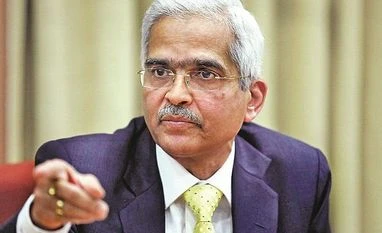
“After a prolonged period of stress, the banking sector appears to be on course to recovery as the load of impaired assets recedes” Shaktikanta Das, RBI Governor
T C A Srinivasa-Raghavan
Last Updated : Jan 05 2019 | 12:21 AM IST
Films, sport, politics, sex — and now central bank governors as well. You’d never have thought a day would come when a part of the media would cover them with the same intensity, even if not the same frequency.

There was a time when no one knew the names of central bank governors, nor cared. I remember going for a job interview in 1973 and being asked who the RBI governor was, I didn’t have a clue and almost said Tulmohan Ram, who was in the news those days for a major scandal.

The obscurity of central bank governors gave way to fame in 1980, when Paul Volcker became chairman of the US Fed and, in order to control inflation in America, brutally squeezed out liquidity. As a result of the ensuing unemployment and the political need to blame someone, the US media raised Volcker to the same level of visibility as Bo Derek, who often dressed scantily in her films.
 
In India, always late to catch up, the 1980s continued along the old lines — near zero mention of the governor’s name even when the RBI was being covered. Between 1977 and 1990, the RBI had four governors whose names probably appeared in the press — only print then — maybe 10 times a year.

There wasn’t even a whisper when one of them threatened to resign and another actually did. Governors were not news, the RBI was — and even that only twice a year when it announced the slack season credit policy in April and the busy season one in October. 

Monkey see, monkey do

This began to change in the 1990s but very slowly. S Venkitaramanan and C Rangarajan were old school and preferred to keep a low profile. 

Even Bimal Jalan, who cultivated the press assiduously, kept his head down and let his deputy governors do much of the talking. The press, which was yet to become the media, also showed a scant interest.

But in 2001, George W Bush chose India as America’s friend. This about-turn in US policy — it had imposed sanctions on India in 1998 after India tested its second nuclear weapon — brought with it a sudden upsurge in the flow of US dollars into India. 

The Western press, catering to the needs of the City of London and Wall Street, soon started focusing on the governor and the Indian media followed suit. The latter became such a nuisance that when a governor asked me once how to avoid the waiting hordes of TV journalists seeking a “bite” I told him never to go anywhere where there was no backdoor.

Then the finance minister became envious of all the coverage the governor was getting and also started giving “bites”. This prompted one finance secretary to tell his minister not to make impromptu statements, to no avail of course.

After September 2008, the coverage of the governor became even more intense and it led to a distinct improvement in the RBI’s media management. The governor started giving audience.

And then, in 2013 came Raghuram Rajan. In appearance, he was very different from two of his immediate predecessors.

Handsome, articulate, IIT, IIM, TAS, MIT, professor of finance — India’s Bo Derek had arrived. The media went crazy and Mr Rajan paid the price. All his erudition and learning could not undo the effect of the out-of-context reporting that followed.

He was followed by Urjit Patel, who can put Trappist monks to shame. But deciding that discretion is the better part of valour was of no use.  If Mr Rajan was toasted, Mr Patel was roasted — for doing a governor’s main job, which is to keep inflation low. 

A turning wicket

Shaktikanta Das has been put in to bat on this wicket. He will not only have to deal with the media but also a new coalition that expands budgetarily unfunded entitlements.

Mr Das is not new to the media, having had to deal with it singly and in groups over the last decade. The high point of that exposure was when he was asked to fish the prime minister’s demonetised chestnuts out of the fire.

Mr Das now has to decide how to deal with it over the next three years. I can offer two suggestions. 

First, don’t stand on status and protocol. Meet the beat journalists over small impromptu private lunches as I believe Mr Jalan used to. As to the editors, they don’t matter. So meet them in groups.

Second, tell the beat reporters what Y V Reddy once said: Watch what I do, not what I say.

One subscription. Two world-class reads.

Already subscribed? Log in

Subscribe to read the full story →
*Subscribe to Business Standard digital and get complimentary access to The New York Times

Smart Quarterly

₹900

3 Months

₹300/Month

SAVE 25%

Smart Essential

₹2,700

1 Year

₹225/Month

SAVE 46%
*Complimentary New York Times access for the 2nd year will be given after 12 months

Super Saver

₹3,900

2 Years

₹162/Month

Subscribe

Renews automatically, cancel anytime

Here’s what’s included in our digital subscription plans

Exclusive premium stories online

  • Over 30 premium stories daily, handpicked by our editors

Complimentary Access to The New York Times

  • News, Games, Cooking, Audio, Wirecutter & The Athletic

Business Standard Epaper

  • Digital replica of our daily newspaper — with options to read, save, and share

Curated Newsletters

  • Insights on markets, finance, politics, tech, and more delivered to your inbox

Market Analysis & Investment Insights

  • In-depth market analysis & insights with access to The Smart Investor

Archives

  • Repository of articles and publications dating back to 1997

Ad-free Reading

  • Uninterrupted reading experience with no advertisements

Seamless Access Across All Devices

  • Access Business Standard across devices — mobile, tablet, or PC, via web or app

More From This Section

Disclaimer: These are personal views of the writer. They do not necessarily reflect the opinion of www.business-standard.com or the Business Standard newspaper
Next Story



