Minister of state for agriculture and Nationalist Congress Party (NCP) leader
Tariq Anwar tells
Aditi Phadnis there is no nepotism in NCP. Edited excerpts:
The Congress asked one of its most senior ministers to resign because one of his relatives had allegedly accepted bribes. Your party members, too, have a lot of relatives within the party; one of them had stepped down, but only briefly. He returned to the government within weeks. What kind of an example does that set? Our party is like a joint family. But we do not condone misuse of power. Some allegations were made against Ajit Pawar and he had stepped down in the best traditions of our party. An objective enquiry took place and, when he was cleared, he returned to the government. The enquiry was set up in response to the demands of the Opposition. If anyone was unconvinced, the doors of the judiciary were open - they could have gone and knocked there. But no one did. Thus, one would assume they were satisfied with the result of the enquiry.
Two Congress ministers have stepped down. Don't you think the Congress is a liability for NCP, with ministerial colleagues having to step down on corruption charges? We are in a coalition, not just in the state (Maharashtra), but also at the Centre. We will fight all these problems jointly. So far, there is no indication that the partnership would come to an end. The decision to be in the United Progressive Alliance (UPA) remains.
There is a year left for the elections. Many decisions are yet to be taken.
But on many of these decisions, your party doesn't agree with the Congress. Consider the Food Security Bill. That Sharad Pawar had opposed the proposal to give subsidised food to 67 per cent of the population was the world's worst kept secret, possibly because it was thought the Congress should be prevented from gaining political capital accruing from such a move. It is not correct to look at it in such sectarian terms. My leader Sharad Pawar did not oppose the Bill. He merely voiced concerns on it - legitimate concerns. If India sneezes, the world catches a cold. In the future, for one or the other reason, say a failed monsoon or problems in procurement, we might have lower foodgrain production. How would we fulfil what would be our constitutional obligation to provide food? Just imagine what would happen to the world market if, with our population, we announce we are going to buy wheat or rice to meet our constitutional obligation.
That is why Sharad Pawar said 'before we make this promise, we must increase the Budget for agriculture to ensure such an eventuality never arises'. If we are providing subsidised food at such a massive scale, our agricultural productivity must go up proportionately. It should not be the case that the food meant for the poor cannot reach them. You and I can afford to buy food from the market. But the poor would only look to the state to provide them food.
There are so many threats to agriculture. The climate is changing because of global warming. This is not a distant threat---it is here and now; we have to confront it. Because of changes in the weather, water is becoming increasingly scarce. In tandem, people's attitude and taste for food are changing.
The government of India has responded to this. In the 2013-14 Budget, the outlay for agriculture has risen. We have to innovate in agriculture to ensure the best possible yield.
In his Budget speech, West Bengal Finance Minister Amit Mitra said seven million fake ration cards in West Bengal were cancelled. If there are seven million fake ration cards in one state alone, what about the entire country? It is on the basis of these ration cards that the government proposes to give foodgrain.
That is why we are working day and night to roll out the Aadhaar programme and are proposing the Direct Benefits Transfer system. The Public Distribution System experience hasn't been good. We need to find an alternative; eventually, Aadhaar would be that alternative. It would check the kind of leakage you are talking about.
What is ideological difference between the NCP and the Congress, now that your party has dropped the issue of the Italian origins of Congress President Sonia Gandhi? On what issues do you differ from the Congress ? And, if you don't, what is the rationale behind two separate political parties that believe in the same ideology?
Well, there are four or five variants of Communist parties. They, too, believe in the same thing, but they haven't merged. We believe in Gandhian nationalism and secularism. There is a difference in our manner of working (karya shaili). If we had been in politics only for power, we would not have fought against the Congress in 1999, when the party was formed. When Atal Bihari Vajpayee was Prime Minister, we were given every possible offer to come on board the National Democratic Alliance (NDA) government.
But NDA had made Sharad Pawar chairman of the National Disaster Management Authority, with the rank of a Cabinet minister. So, he was a de facto minister.
Yes, but we had ideological differences with the NDA. We could have been part of that government. Even in Maharashtra, when the Bharatiya Janata Party and the Shiv Sena offered to team up with us to form a government, we refused. When the Congress offered us a partnership and gave us the deputy chief ministership, we opted to become the junior partner, despite our large numbers.
What is your view on family rule?
We don't have family rule. If Ajit Pawar became deputy chief minister in Maharashtra, it was after a long political battle. This was also the case for Supriya Sule, who had done long and sustained work in the fields of women's development and education. She has also contested a Lok Sabha election, not taken the Rajya Sabha route. If Sharad Pawar had wanted, he could have made Supriyaji vice-president or even president. There is no foisting of leadership in our party.
If you had a say, whom would you prefer as the UPA's prime ministerial candidate?
We decide on our leader, and our leadership, in turn, decides in what proportion our party should be in the government. The Congress has to decide who its leader has to be. We can't say we want A or B: if they decide on Rahul Gandhi, it's their decision. We can't interfere.
What if Manmohan Singh is given another term?
I cannot answer 'if' and 'but' questions. The Congress leadership has to take the decision; we will make up our mind after that. Right now, Manmohan Singh is the prime minister, and our leader. The Congress has not indicated any change in this. It is their internal matter. We will not make any suggestion.
Sharad Pawar has said he wants to step down. Who will lead your party after that?
Sharad Pawar has been in politics for 40 years. He has never lost a single election, whether for the assembly or the Lok Sabha. Now, he wants to take some rest. But the workers hope he continues to lead us. He has never said he would abandon politics. He would continue to stay in politics and fight for the India he dreams of. So, the time to name a successor has not come yet.

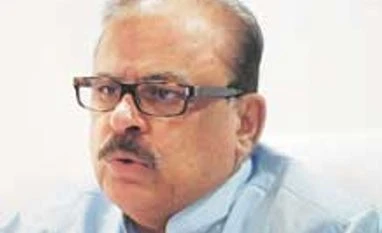 "There is no foisting of leadership in our party: Tariq Anwar")


