Tried and tested

Legacy schemes are working in the time of Covid crisis
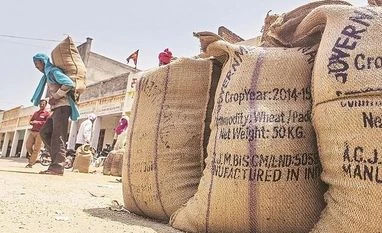
farmers, FCI, food corporation of india, grains, production, farmers, MSP, labourers,
Business Standard Editorial Comment
3 min read Last Updated : Jun 18 2020 | 11:38 PM IST
Given the sharp impact of the pandemic and the successive stages of the lockdown on employment and income, it is essential for the government to monitor how its welfare schemes are managing under the exceptional pressure those are under. The initial news appears heartening, particularly when it comes to the legacy schemes such as the Mahatma Gandhi National Rural Employment Guarantee Scheme (MGNREGS) and the Public Distribution System (PDS). While it is understandable that recent advances in technology and digital connectivity have allowed for other pipelines for relief to be opened up, this recent experience with the pandemic and the lockdown suggests the older schemes retain their utility and, indeed, remain essential.

The MGNREGS, for example — a demand-based scheme — has seen a considerable upturn in the number of person-hours of work for which wages are due. In May, the number of person-days of work generated was 5 per cent higher than the initial target; in May 2019, for comparison, it was 10 per cent lower. A similar effect might be visible in June as well. Therefore, the government has done well to increase allocation on this. The increased demand may not be only due to the economic shock in areas with a greater uptake of the MGNREGS. The additional consideration is that many areas will have received reverse migration from urban areas, and the returned migrants will need some form of employment. Pending the development of real jobs, the MGNREGS is necessary to play a bridging role. The increase in wages under the scheme by Rs 20 is the minimum that could have been expected, given that demand for MGNREGS wages is chronically higher than the supply due to inefficiencies in implementation. The government must also move faster to settle the outstanding dues that are with the state governments on this account.

When it comes to the PDS, it has clearly played a crucial role in preventing the spread of hunger across affected areas. This is not to say that it does not continue to have holes. As the economist Jean Dreze has pointed out, 500 million Indians do not have cards under the National Food Security Act, and not all of them are middle-class. The government must take action on several fronts to ensure the PDS continues to serve as effective relief. First, the doubling food rations can be sustained a little longer — at least till the harvest. Second, if universalising benefits is deemed too dangerous, then for this same length of time some other form of temporary access to the PDS should be devised — perhaps temporary ration cards. Finally, states that are suffering the brunt of reverse migration should receive additional foodgrain access from central stores. Fortunately, India has a vast reserve of foodgrain. There is no point trying to conserve it in times like these.
 
These legacy programmes continue to have many problems, and are not as efficient and corruption-free as many would like. But the fact is that the government has done well to use them to provide relief. It should top up the funds and resources they need so that they continue to function as India returns to normalcy.

One subscription. Two world-class reads.

Already subscribed? Log in

Subscribe to read the full story →
*Subscribe to Business Standard digital and get complimentary access to The New York Times

Smart Quarterly

₹900

3 Months

₹300/Month

SAVE 25%

Smart Essential

₹2,700

1 Year

₹225/Month

SAVE 46%
*Complimentary New York Times access for the 2nd year will be given after 12 months

Super Saver

₹3,900

2 Years

₹162/Month

Subscribe

Renews automatically, cancel anytime

Here’s what’s included in our digital subscription plans

Exclusive premium stories online

  • Over 30 premium stories daily, handpicked by our editors

Complimentary Access to The New York Times

  • News, Games, Cooking, Audio, Wirecutter & The Athletic

Business Standard Epaper

  • Digital replica of our daily newspaper — with options to read, save, and share

Curated Newsletters

  • Insights on markets, finance, politics, tech, and more delivered to your inbox

Market Analysis & Investment Insights

  • In-depth market analysis & insights with access to The Smart Investor

Archives

  • Repository of articles and publications dating back to 1997

Ad-free Reading

  • Uninterrupted reading experience with no advertisements

Seamless Access Across All Devices

  • Access Business Standard across devices — mobile, tablet, or PC, via web or app

Topics :MGNREGALabour lawslabour law reform

Next Story



