Virtual reality classrooms can give Chinese kids an edge
Genders of virtual teachers can change to suit cultural norms of the classroom
David Ramli Deep within a building shaped like the Starship Enterprise, a little-known Chinese company is working on the future of education. Vast banks of servers record children at work and play, tracking touchscreen swipes, shrugs and head swivels - amassing a database that will be used to build intimate profiles of millions of kids.
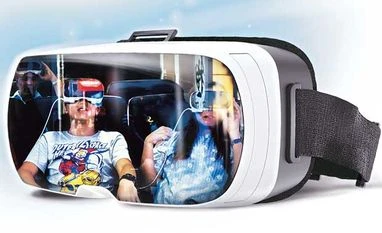
This is the Fuzhou hive of NetDragon Websoft Holdings Ltd, a hack-and-slash video game maker and unlikely candidate to transform learning via headset-mounted virtual reality (VR) teachers. It's one of a growing number of companies from International Business Machines Corp to Lenovo Group Ltd studying how to use technology like VR to arrest a fickle child's attention. (And perhaps someday to make a mint from that data by showing them ads.)
China - where parents have been known to try anything to give their kids an edge and tend to be less obsessive about privacy - may be an ideal testing ground for the VR classroom of the future. As it's envisioned, there'll be no napping in the back row. Lessons change when software predicts a student's mind is wandering by spotting an upward tilt of the head. Dull lectures can be immediately livened up with pop quizzes. Even the instructor's gender can change to suit the audience, such as making the virtual educator male in cultures where teachers are typically men.
"It is the next big thing and it's been brewing for quite some time," said Jan-Martin Lowendahl, a research vice-president with Gartner Inc. "If there's any place it would work, it's China, Korea, those kinds of places."
"It's hugely revolutionary and it's also necessary because it's obvious that the current educational models do not scale."
The notion of adaptive, computer-based teaching has bounced around for more than a decade. Done right, it's got the potential to fundamentally alter learning. Educators who've relied on their gut and visual cues could be replaced or augmented by digital avatars powered by algorithms, which can in turn be replicated across the planet. Advocates argue that the benefits of using machines to scrutinise children and learning to adapt to their foibles will outweigh questions of privacy because soon there won't be enough human teachers.
"There's no way we can deal with it without adding scalable learning technologies," Lowendahl said.
Of course, the growing corporate involvement isn't altruistic - there's money to be made, and by some accounts Chinese companies are taking the lead in commercialisation. NetDragon wants to become among the first to put it in practice on a larger scale. It paid £77 million ($100 million) for British online education provider Promethean World Plc last year and now serves 2.2 million teachers with 40 million pupils. It's field-testing VR lessons, handing out headsets and tablets in Chinese schools and encouraging teachers to try out tailored curricula on their kids.
Researchers then track pupils' activity within the VR environment; as a complement to that, tablets come with cameras that can be used to visually monitor students.
"Not only do we want to track it when they're in the classroom, we want to track it when they're on the go, when they're mobile or when they're at home so we can have a 360-view of how kids learn," NetDragon vice-chairman and former Microsoft executive Simon Leung said, adding that the technology might be ready by 2017.
© 2016 Bloomberg

 "Virtual reality classrooms can give Chinese kids an edge")


 Connect with us on WhatsApp