As I write this, a furious debate is raging over whether a BBC documentary about the December 2012 Delhi bus rape case should be aired. While some are arguing whether the film should provide a platform for the rapist to air his views, others are fighting over whether it should be aired in India, and still others are questioning how the filmmaker, 57 year old Leslee Udwin got permission to interview one of the rapists.
Meanwhile BBC has already aired the documentary in the UK, having advanced its telecast date in light of the controversy, and a viewer has uploaded the film to YouTube, and is doing the rounds on social media.
Having been raised in India’s capital, also disparagingly known as the country’s ‘rape capital’, and watching the excerpt that showed Mukesh Singh having the audacity to blame the victim without any trace of remorse has brought back the anger of 2012. The fact that the man was given a chance to voice his opinion feels like an insult to each one of us who felt so strongly against the rape, for every person who protested.
In the aftermath of the December rape, every insensitive, sexist and misogynistic remark by politicians, Khap Panchayats, social media users was met with a wrath they had never faced before. No one was willing to put up with it anymore. There was a sense of renewed vigour in the fight for women rights which was not going to be subdued. The average girl who would look the other way while being eve-teased started fighting back.
I am vehemently against the government’s move to seek a ban on the film, but I am also equally vehemently against the main accused being given a mouthpiece to justify his deed in the first place.
Watching the excerpt that showed one of the rapists having the audacity to blame the victim Why do we have to hear what this terrible man has to say? Why is the world so shocked by seeing a rapist involved in raping and murdering a girl making misogynist statements?
There are politicians and public figures making exactly the same kind of remarks every day – why doesn’t that offend us as much?
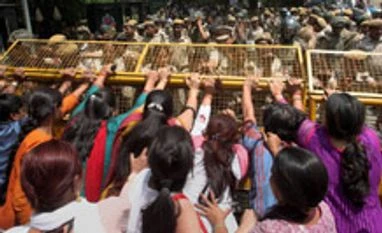
It did in December 2012, when tens of thousands of the city’s residents, including me, held enraged protests along the wide boulevards of Lutyens. Raisina Hills’ majesty was caught by the winter sun but, in truth, it was Delhi that was on fire.
Growing up a girl in Delhi, a constant flow of news of rapes and other crimes against women had inured us to its brutality. We had neither the cure nor the reasoning. Ignorance was our key to a peaceful existence in Delhi. And then December 16 happened.
Delhi shook in anger. It could have been the extent of the brutality in this particular case, but an unanswered question loomed: What evoked such a visceral reaction like this, why did it suddenly feel so strangely personal to us all?’ Because she was one of us, just like any of us. It could have been my best friend. It could have been me.
Udwin saw the protests and came to India with the purpose of showing the dark underside of India's patriarchal mind-set that instigated such crimes.
“It was an Arab spring for gender equality, what impelled me to leave my husband and two children for two years while I made the film in India was not so much the horror of the rape as the inspiring and extraordinary eruption on the streets. A cry of ‘enough is enough’…. That gives me optimism. I can’t recall another country having done that in my lifetime,” Udwin wrote in The Guardian yesterday.
She aimed to show an ugly reflection in the mirror that India refuses to see. And interviewing one of the rapists was her way of showing those views, but it was perhaps short-sighted of her to not consider that the face she chose to portray those sentiments would only negate her larger argument.
Consequently, the focus of the entire film which aimed at portraying the state of our country's mindset has been overshadowed by the controversy the film now faces, and the real debate has been pushed to the sidelines.
The argument being presented by the film through the rapist’s blaming the victim is to show the general mindset in this country, but isn’t dumping it all on a so-called ‘mindset’ taking the blame away from the rapist and thus failing thousands of victims?
Yes, mindset is a vital point. But a rapist making these remarks isn’t exactly supposed to enlighten a country that feeds on that kind of mindset.
Delhi, two years ago, saw the birth of a movement towards a national debate on the condition of women in the society. That is the debate we need to have, and there is still a long way to go.

 "Why the BBC documentary on Delhi bus rape misses its mark")


