One of the first things I learnt in public life was to use strong filters when listening to accusations. Wild charges are the very stuff of our public life, more so in our political life. Talk to anyone about anyone who matters, you are bound to hear a flurry of allegations. If it is a man, it is ‘paisa kha gaya’, and if it is a woman, it is ‘character loose hai’. As a result, I have become procedurally fussy: Bring me some evidence before we talk about it. That is why I was conflicted when the global trend towards exposing sexual harassers began.
There are two ethical precepts that are in conflict with each other. On the one hand, there is desperate need for public expose. It is nauseating to see how sexual harassment is pervasive in all walks of our public life. It is nothing short of a national scandal that the perpetrators go scot-free even after they are caught. Something big, something dramatic was needed to bring this under the arc light of public scrutiny. On the other hand, there is need for procedural fairness. Serious allegations against someone, years after an incident, and that too without good evidence, violate a basic sense of fair play. This can and has been misused. So, when a list of alleged academic offenders was crowdsourced and put out last year, I could not relate to it and was relieved that some feminist scholars demanded greater responsibility from such public acts of naming and shaming.
But the latest wave of public disclosures about how powerful and hitherto respectable men in the media used their position to harass, humiliate and violate women is quite different. The women in #MeTooIndia are not hiding behind a veil of anonymity. They are coming out in the open, identifying themselves, naming the perpetrators, and are willing to pay the price for speaking out. Their courage mandates that we take what they say seriously. Their accounts are not just wild, broad-brush allegations.
Most of the stories I read in the last one week are quite detailed and surprisingly fair to the accused, given the distance of time and the nature of trauma. And, there is some circumstantial evidence to corroborate what these women are saying: some testimony recorded then, an eyewitness, a piece of communication, and so on. All this may not add up to hard, irrefutable evidence in a court of law, but you have to be morally numb not to feel that these stories are believable, credible and authentic. You have to be cussed if the fact of these women standing up to powers-that-be does not move you.
Is this enough to put these stories out in the public domain, naming and shaming persons with reputation to defend? My answer is yes. Most of these women were professionally junior and therefore suffered double disadvantage when they faced harassment from senior male colleagues. There is no way established protocol of fair trial and standard of proof could validate their truth in the public domain. The situation demanded a new method.
Yes, there is a danger that this moment could become a licence for mud-slinging. Every fling, every relationship gone awry, any indiscretion, stupidity or even confusion can be presented as a criminal act of harassment. Yes, this collective and public ‘truthcovery’ has to evolve its own standards and protocols to prevent misuse. But none of this wisdom should be allowed to shut this rare window of opportunity that has opened with #MeTooIndia.
The opportunity here is not just a safer workplace for women. This moment has arrived in the wake of the Supreme Court judgments on privacy, Section 377 and adultery. This is happening concurrently with women students of several universities demanding freedom from arbitrary restriction for women on the campus. In this context, #MeTooIndia holds the promise of changing the public culture on issues related to gender in our country. There is already something positive. Mainstream media has been forced to break its silence on this issue. Perhaps for the first time, such disclosures have been followed by clean apologies, resignation and inquiries. Much more can and should be expected in the days to come.
Will this moment turn into a movement to transform our public culture? It depends on how this moment can be seized and expanded. This moment has emerged from the world of the Indian elite (that loves to call itself middle class) and the professions under public gaze. There is nothing wrong with it. All such movements against injustice and oppression begin with the relatively privileged section of the underclass. Or else, it would never come to light.
But the point is to take this to the vast and vulgar world where everyday sexual violation of the worst kind goes unnoticed and unreported. The movement must travel from metropolitan India to small towns and villages. Its scope must be expanded beyond media to business and politics, beyond organised sector to the employees in the unorganised sector, beyond public life to the rampant sexual violence within Indian homes. #MeTooIndia can reset our social compass on gender sensitivity.
As I read and celebrated #MeTooIndia, I noticed two news items. A number of schoolgirls were assaulted in Bihar for daring to protest against continuous sexual harassment. The President of India has appointed as the vice-chancellor of Visva Bharati University, Tagore’s dream child, an academic who was held guilty and punished (and not exonerated, as reported in the media) for sexual harassment by Delhi University.
These two instances show us the dark spots where the gaze of #MeTooIndia must turn now. Till then, let us all salute those women who have spoken out and those who are planning to join #MeTooIndia.
By arrangement with The Print
The author is national president of Swaraj India

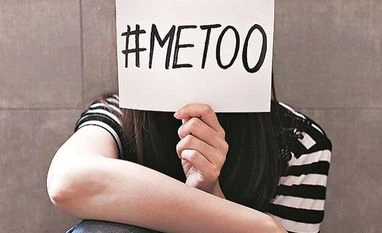 "Will #MeToo transform our public culture?")












 Connect with us on WhatsApp