Banking sector funds have given an average return of 54.40 per cent over the past one year, according to Value Research. After this run-up, investors should not over-allocate to these funds, expecting similar returns in the near future.
A large part of these returns can be attributed to the base effect. “Between January and February last year, the markets had corrected, which is why you are getting an average return of 54 per cent. If you change the base to January 1 of last year, the return will be lower,” says Amit Premchandani, fund manager, UTI Banking Sector Fund.
As the economy recovers from demonetisation and its growth rate improves in FY18, the banking sector, which is a proxy for the economy, is expected to benefit. “Typically, the banking sector grows at 1.5-2 times the nominal economic growth rate,” says Shrey Loonker, fund manager, Reliance Nippon Asset Management. The past 12 months have witnessed a few developments, he says, which will be positive for the sector. First, interest rates have trended down, aiding corporate India’s profitability. Second, after FY16 there has been deceleration in accretion to bad loans. And third, demonetisation has added structural low-cost liquidity to the system and also led to formalisation of the economy. He expects the sector to deliver superior returns over the next 18-24 months due to higher credit growth in FY18 and due to asset resolutions gathering steam over the medium term.
Private banks are expected to continue gaining market share at the expense of public sector banks (PSBs). The losses PSBs saw in FY16 are unlikely to continue but recovery is likely to be slow. The treasury gains they enjoyed in FY17 might also not recur as bond yields have bottomed out.
Experts expect the top-rung private banks to record about twice the loan growth of the sector — in the region of 20 per cent-plus. While margins of many private sector banks have peaked in FY17, the slide will be more muted in FY18 than was previously feared, due to the cash deposited during demonetisation, which has reduced cost of funding. According to Premchandani, the return ratios of some corporate focused private banks could improve and retail focused private banks stay stable at high levels, while PSBs might show improvement from a low base in FY18.
While the sector’s fundamentals are likely to improve, investors need to be cautious. "After the recent run-up, there is scope for some correction, or there could be a time correction. Many stocks are already pricing in FY18 earnings," says Premchandani. Loonker is of the view that investors could benefit if they invest with a three-five year horizon.
Aggressive investors may take a 10-15 per cent exposure to sector funds, including banking funds. Choose a fund from this category that is diversified. “The portfolio should not have only NBFCs, but should also have private banks, and to some extent, PSU banks,” says Premchandani.

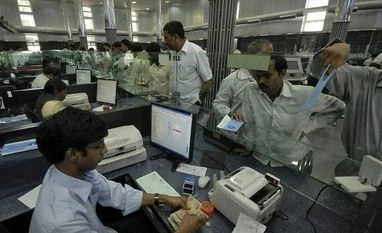 "<b>Your money:</b> Don't over-allocate to banking sector funds")












