It isn't easy for a debt fund investor
For existing investors, it is a good time to take a re-look at your portfolio; new ones need to be more careful
Joydeep Ghosh Mumbai In the past five years, retail (small) investors have found a lot of solace in debt funds. After all, the returns have been better than even large-cap equity funds. The category average return in large-cap equity funds has been 7.38 per cent per year, whereas the category average return of all debt funds have been between 8.63 per cent and 9.41 per cent. Even in the past year, due to the huge volatility in the stock markets, debt funds have outperformed almost every category of equity schemes. But, Amtek Auto and, more recently, Jindal Power and Steel’s (JSPL) non-payment to asset management companies caused a lot of heartburn to investors. Investors in leading fund houses like Franklin Templeton, ICICI Prudential and JPMorgan (now sold to Edelweiss) have had to take haircuts on these papers.
Says Hemant Rustagi, chief executive officer (CEO), WiseInvest Advisors: “Two years back, a lot of investors entered debt funds in anticipation of lower rates and higher yields. But, things have suddenly gone sour. It is a good time for these investors to take a re-look at their debt portfolio and assess if they are comfortable with the risk-return matrix.”
This advice comes for a good reason. As recent ICRA online data shows, the problems for fund houses are far from over. Many are still saddled with significant amounts of lower-rated debt paper, about Rs 2 lakh crore till February. Given that fund houses held around Rs 12.62 lakh crore in average assets under management and, of this, Rs 3.8 lakh crore are in equities, almost 25 per cent of the debt money is in lower-rated papers. Experts say the blame cannot be entirely laid on the fund manager. “Many fund managers have seen a sudden change in the ranking of their debt papers. This has caused them and the fund house much grief,” says a CEO of a fund house, who did not wish to be named.
And, it is not about short-term or long-term schemes. Says Amit Tripathi, head, fixed income, Reliance Mutual Fund: “The same issuer issues papers for different tenors and all have different rankings. So, the underlying issuer risk will be the same, but because of the nature and tenor of the instrument, ratings used might depict a different picture.”
Investors need to understand debt funds better. Remember that there is both credit and duration risk. “Understand the risk vis-a-vis the return. Many people invested in debt funds and took higher risk by looking at past performance. But, now, we are clearly in an era in which companies are finding it very difficult. And while the government and the central bank (Reserve Bank of India) are doing their bit, there has to be rate cuts and these cuts have to be passed on. But, all this will take time,” adds a debt fund manager.
In such circumstances, if you are uncomfortable with your portfolio and risk-return profile, don’t hesitate to make changes, suggests Rustagi. While this obviously means exit loads and even short-term capital gains, it is better than risking capital. New investors also need to do due-diligence or seek professional help. The good news is mutual funds are diversified in nature. Also, since the Securities and Exchange Board of India has put a cap on a single scheme’s exposure to a company at 10 per cent from 15 per cent earlier, risk has been curtailed substantially. Even sector exposure has been limited to 25 per cent.

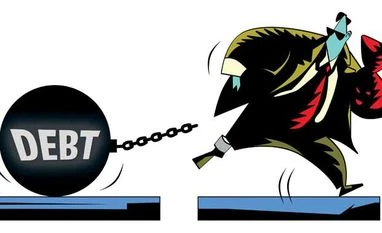 "It isn't easy for a debt fund investor")


 Connect with us on WhatsApp