The real estate market seems to have largely shaken off the effect of demonetisation and returned to pre-November level of activity. Many buyers had expected a massive, 30 per cent or so, decline in prices due to the government’s war on black money, and had postponed purchases. While that did not happen, it still remains a buyer’s market, as prices are either stable or moving up slowly across the country (see table). Also, the introduction of the Real Estate Regulation and Development Act (Rera), at least by some states, should help bring transparency to the real estate market. As Deepak Parekh, Chairman, HDFC, told Business Standard recently: “Rera is a confidence builder for the consumer. It will change the way the industry operates and it will bring in greater transparency. And with transparency, the home buyer will be able to make better informed decisions.” While Indian buyers, generally, do not make property purchases during May-September due to holidays, rains and religious reasons, buyers who are looking for good deals can scout for property now, say experts.
Delhi-NCR: The slowdown, which has lasted for more than three years, continues. Several factors are responsible for the prolonged slump. “Between 2010 and 2012, prices doubled within a two-year period and that took a toll on affordability. There was a lot of investor activity during that period. But when the price rise stopped finally, investors’ money got stuck. So they are staying away from the primary market now. End-users are keeping away because of lack of trust, as several developers have failed to deliver projects. Oversupply in some micro-markets and delay in construction of key infrastructure projects, like the Dwarka Expressway, have also contributed to the slowdown,” says Anshul Jain, managing director, India, Cushman & Wakefield.
Mumbai: Sales had got impacted severely in the October-December quarter due to demonetisation, but recovered in the January-March quarter to attain the same level as in the fourth quarter of FY16. Mumbai accounted for 23 per cent of total sales during this quarter (in the country’s top nine destinations), and 26 per cent of total launches, according to data provided by Prop Tiger Data Labs. Around 50 per cent of sales came from the under-Rs 50-lakh price point and 26 per cent from the Rs 1-crore-plus segment. Launch of projects in the affordable sub-Rs 25-lakh segment was the maximum at 35 per cent (of the total in top nine cities). “The average price fell by 2 per cent in the fourth quarter of FY17 due to the fall-out of demonetisation, but remains 2 per cent above the preceding three-year level,” says Sunil Mishra, chief strategy officer, PropTiger.com.
Hyderabad: Absorption of commercial space by the IT sector has been high over the past couple of years. High demand in the commercial segment gets reflected in higher demand within the residential segment as well, albeit with a lag of six months. “Affordability is perhaps the best here among the country’s leading cities. Hence, the scope for appreciation is also higher than in other cities where prices have already risen a lot,” says A S Sivaramakrishnan, head, residential services, CBRE South Asia. The quality of infrastructure is good. All these factors have contributed to the current buoyancy.
Bengaluru: After demonetisation, many buyers had put their purchase decisions on hold in anticipation of a drastic decline in prices. But they are now coming to the market. Enquiries and sales are picking up in Bengaluru. “This is an end-user driven market. Moreover, people’s capacity to hold on to their real estate investments is very high. Most people who have invested in real estate have put in their surplus capital, which they will not need any time soon. That is why prices have not fallen much despite demonetisation,” says Sajid, manager, Silverline Realty, a Bengaluru-based real estate broking firm.
Chennai: From 2009-2013, prices went up in some micro-markets of Chennai by 25-30 per cent annually, affecting affordability. After a slowdown of 12-18 months, sales volumes have picked up in the fourth quarter, especially in areas such as Old Mahabalipuram Road (OMR), which is the IT corridor. “Properties that are ready or close to possession are being lapped up by customers. The market has started picking up, especially around the Rs 3,000-3,500 per sq. ft price point,” says Sivaramakrishnan.
Ahmedabad: The city has seen significant sales momentum. In the fourth quarter of 2017, sales were up 30 per cent year-on-year. Two-thirds of sales have happened in the sub-Rs 50 lakh segment here. “Prices have remained largely stable, with a 6 per cent increase over the past three years,” says Mishra.
High inventory putting pressure on developers
With supply exceeding demand (see table for inventory figures) and prices remaining stable, market dynamics still favour the buyer. “In the NCR, prices are 10-20 per cent lower than in 2013. If you also factor in the time value of money over the past four years, prices are at a record low,” says Jain. Sajid adds that with so much supply available, buyers have a lot of options to choose from. “Builders are willing to negotiate on prices currently.” Reduction in interest rates on home loans to 8.35-8.50 per cent also led to improved affordability.
However, finances of builders, especially the smaller ones, are not in good shape, so buyers need to watch out for the risk of non-delivery and delays. “Buy finished or near-finished projects where you have clear visibility of delivery. It is very unlikely that under-construction projects will come under the purview of Rera. If you buy an under-construction property, opt for very reputed developers who have a strong track record of delivery,” advises Jain.
Mishra warns that fence-sitters should act soon. “If one believes that demonetisation and Rera are game changers for the sector, then demand could take off soon. Private equity investors seem to be taking this view and are investing heavily. Prices may remain stable for a few more quarters as old supply gets liquidated but will start rising thereafter,” he says. Time for the smart buyer to check in.

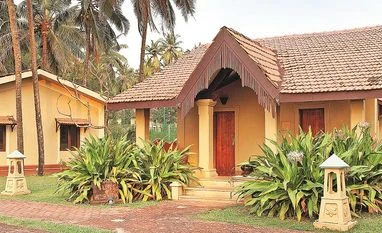 "It's a good time to buy a house")












 Connect with us on WhatsApp