Growth with human face: Shah's poll strategy for UP
BJP to raise Mathura violence and exodus of Hindu families from Kairana
Archis Mohan Allahabad The Bharatiya Janata Party (BJP) will contest the Uttar Pradesh Assembly polls on Prime Minister Narendra Modi government’s policies of “growth with a human face”. The party will also raise the ‘lawlessness’ unleashed by the supporters of the incumbent Samajwadi Party (SP) government in the key northern state, particularly by sections among the Yadav and Muslim communities.
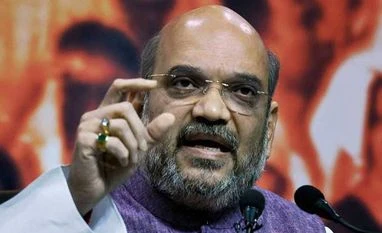
While PM Modi’s Saharanpur rally on May 26 on the occasion of his government completing two years in office marked the sounding of the bugle for the UP Assembly polls to the party cadre in the state, Shah’s speech to his party leadership on Sunday, the first day of the party’s national executive meeting, charted out the poll strategy. He said 2017 will be full of challenges for the party with elections in Punjab, Uttarakhand, Goa, Gujarat, Himachal Pradesh, and of course UP.
If Shah’s speech is any indication, the strategy in the months and days to come could see cadres pursuing a more aggressive Hindutva line in the state. Shah specifically talked about the exodus of Hindu families from Muslim-dominated Kairana district of western Uttar Pradesh and how the Mathura incident was symptomatic of the lawlessness in UP under the Akhilesh Yadav-led SP government. The BJP leadership had earlier alleged the obscure cult, which had illegally occupied government land in Mathura, led by its leader Ramvriksh Yadav, had the blessings of a senior minister in the SP government. Shah’s speech, however, was silent on the issue of the construction of the Ram temple in Ayodhya, which suggests the issue isn’t part of the party’s immediate agenda. Shah also stressed how two leading Islamic countries, Saudi Arabia and Afghanistan, honoured the PM with their highest civilian honour in the space of two months.
Shah asked party leaders to take the Modi government’s message of ‘growth with a human face’ to villages, which would be important if the party had to return with a bigger majority in 2019. He said party workers could help the BJP win a majority in UP in 2017 as well. Uttar Pradesh dominated the proceedings not just inside the makeshift hall at the KP College grounds but outside, in the city at large, as well. The city landscape was dotted with multitude of hoardings that projected BJP’s Lok Sabha member from Sultanpur Varun Gandhi as its chief ministerial face for UP. Later, briefing the media, senior BJP leader Ravi Shankar Prasad said the decision on the party’s chief ministerial candidate would be taken by its Parliamentary Board. With Home Minister Rajnath Singh unwilling to be the face, the party has decided to conduct surveys across UP to gauge the popularity of its leadership in the state.
BJP’s defeat in the neighbouring state of Bihar had much to do with the script its leadership had written for UP elections. The two states had together contributed around a third of the BJP’s 282 seats in the 2014 Lok Sabha polls and, importantly, if Modi has to return to power in 2019.
However, Prasad, briefing the media later in the day, disagreed with the assessment that the government’s reform agenda suffered after the Bihar defeat. He said the government brought in key reform Bills, including the Insolvency and Bankruptcy Code. He also rejected the notion that BJP was stoking communal passion.
Prasad added BJP’s success in the Rajya Sabha polls, winning at least two extra seats than it had anticipated, was a shot in the arm for the party.
According to him, the strategy for the passage of the goods and services tax constitution amendment Bill would be discussed nearer the monsoon session of Parliament in end-July. He said the real story of the Rajya Sabha results was the weakening of the Congress.
In his speech, Shah pointed to BJP’s stellar performance in the recently concluded elections, particularly its victory in Assam and increased vote share in Kerala, as a unique achievement. He said the Assam victory had opened for BJP the gateway to the northeast and that the party now should work hard in the coastal states of West Bengal, Odisha and the rest.
He spoke at length about the successes of two years of Modi government, which unlike its predecessor Congress-led United Progressive Alliance, has struck a balance between reforms and social welfare. He pointed to the improved gross domestic product numbers, lower fiscal and current account deficits as the achievements of two years of the Modi government.

 "Growth with human face: Shah's poll strategy for UP")


 Connect with us on WhatsApp