J&K turmoil: India way ahead of Pakistan in the game of diplomatic Chess

So far, there have been few surprises from both India's friends and enemies over the government's move on J&K
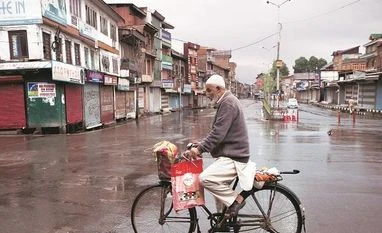
Ease of restrictions in the Kashmir valley will help India's case at the international level
Aditi Phadnis
5 min read Last Updated : Aug 19 2019 | 2:23 AM IST
When the Bharatiya Janata Party (BJP)-led government decided it was going to keep its manifesto promise and abrogate the provisions under Article 370 and Article 35 A relating to Jammu and Kashmir, it was conscious of the international dimension of the decision. Managing the domestic fallout was important — but it was manageable. What was harder was to manage the external environment. So far, there have been few surprises, both from India’s friends and its enemies.

The abrogation came amid a public denial by India that the US had been sought out as a mediator in the Kashmir issue. But the seeds of doubt had been sown about the role and influence of the US on the abrogation decision, so when it was suggested in a newspaper report that India had cleared the abrogation with the US before announcing it, New Delhi didn’t even bother to react. The acting assistant secretary of the US’s South Asia Bureau, Alice Wells, tweeted within hours: “Contrary to press reporting, the Indian government did not consult or inform the US government before moving to revoke Jammu and Kashmir’s special constitutional status.” 

This meant the US endorsement of the action had not been obtained beforehand and the Pakistan foreign office immediately bounded to Washington, urging, pleading, cajoling, and dangling the Taliban carrot before the US. It followed this up with several lifeline calls: To Beijing, reminding it that significant real estate was involved; the Organisation of Islamic Conference (OIC), which has proven an influential ally on the issue in the past, and the European Parliament, for what it is worth.

India’s responses were calm and measured. It called envoys of foreign countries and briefed them on what the abrogation really meant; it went to work on friends (and investors) in the Islamic world to call in past IOUs and to reassure them of its honourable intentions in its treatment of a wayward child; all the while, reminding the world that India had almost never deviated from its commitment to democracy and human rights.

The bilateral relationships were easier to manage. The United Arab Emirates (UAE), for instance, needed no persuasion: The UAE’s ambassador to New Delhi, Ahmed Al Banna, described India’s decision as an “internal matter” that would “improve social justice and security and confidence of the people in the local governance and will encourage further stability and peace.” So fervent was the UAE position in India’s favour that it was toned down later. Despite a large number of Pakistanis working and living in the UAE, India constitutes a more important commercial partner than Pakistan. 

It was the multilateral environment that posed more of a challenge. Pakistan had powerful friends like China and transactional allies like the US. While in the past the Organisation of Islamic Conference (OIC), which represents 57 Muslim-majority countries around the world, would routinely pass resolutions against India, this time the situation was a bit more complicated: Pakistan immediately requisitioned a meeting of the OIC Contact Group on Jammu & Kashmir. The meeting was held in Jeddah on August 6 and was attended by Pakistani Foreign Minister Shah Mahmood Qureshi, and the representatives of Azerbaijan, Niger, Saudi Arabia and Turkey. Predictably, the OIC issued a condemnation and reiterated the international status of the Kashmir dispute. But it could have been worse had India not addressed the issue.

So here were four countries — other than Pakistan — which had to be convinced of India’s intentions. All of them are sworn friends of Pakistan. Turkey has never hidden its closeness to Pakistan. Saudi Arabia said one thing at the OIC (condemn human rights violations in Kashmir; take the matter to an international forum to resolve) and another to India in its bilateral statement (talk to Pakistan and resolve it bilaterally). And Azerbaijan and Niger have historic relations with Pakistan.

New Delhi has been cultivating Azerbaijan since 1991, when the country declared its independence from the Soviet Union. Baku’s sworn enemy is its neighbour, Armenia, and India’s diplomatic relations with that country have been a source of some griping (Pakistan does not have an embassy in Armenia). But as businessman and contributor to the Observer Research Foundation, Avijit Goel notes bilateral trade between India and Azerbaijan is a different story: This shot up almost 10 times from 2005 to 2017 (from about $50 million to close to $500 million in 2017). Somewhat similar is the story with Niger, the 98.3 per cent Islamic west African nation, the fifth-poorest in the world, which is friendly to Pakistan but whom India helped out with a $15 million grant and promises of infrastructural assistance to help it host the African Union (AU) summit meeting (India has never done this before).

This was capped by the United Nations Security Council (UNSC) meeting of the P5 in New York, called by China upon being egged on by Pakistan. As India was not among the participants, it had to control the environment remotely and prevent it from becoming hostile. While the full details of what happened at the meeting will emerge gradually, international observers said it was a zero-sum result. “The UNSC's decision to not issue a statement or call an emergency meeting on Kashmir shows its reluctance to get involved in this dispute,” Anwar Iqbal, a Washington-based Pakistani analyst, told Deutsche Welle, the German news channel. 

The battle to manage the international environment over Kashmir has just begun, but what is expected to help is the lifting of internal controls. All eyes are now on that exercise.

One subscription. Two world-class reads.

Already subscribed? Log in

Subscribe to read the full story →
*Subscribe to Business Standard digital and get complimentary access to The New York Times

Smart Quarterly

₹900

3 Months

₹300/Month

SAVE 25%

Smart Essential

₹2,700

1 Year

₹225/Month

SAVE 46%
*Complimentary New York Times access for the 2nd year will be given after 12 months

Super Saver

₹3,900

2 Years

₹162/Month

Subscribe

Renews automatically, cancel anytime

Here’s what’s included in our digital subscription plans

Exclusive premium stories online

  • Over 30 premium stories daily, handpicked by our editors

Complimentary Access to The New York Times

  • News, Games, Cooking, Audio, Wirecutter & The Athletic

Business Standard Epaper

  • Digital replica of our daily newspaper — with options to read, save, and share

Curated Newsletters

  • Insights on markets, finance, politics, tech, and more delivered to your inbox

Market Analysis & Investment Insights

  • In-depth market analysis & insights with access to The Smart Investor

Archives

  • Repository of articles and publications dating back to 1997

Ad-free Reading

  • Uninterrupted reading experience with no advertisements

Seamless Access Across All Devices

  • Access Business Standard across devices — mobile, tablet, or PC, via web or app

Topics :Article 370Pakistan Jammu and Kashmirinternational diplomacy

Next Story


