Rahul's new strategy of hiring volunteers for Karnataka, Rajasthan polls

It is also part of the effort by chief Rahul Gandhi to shape the 'new Congress'
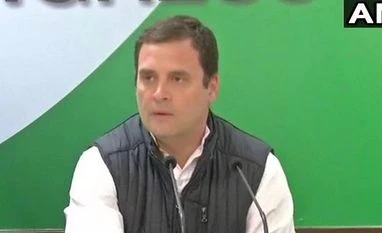
Rahul Gandhi
All citizens who love the idea of justice are looking at this issue, needs to be addressed: Rahul Gandhi
Archis Mohan New Delhi
Last Updated : Jan 25 2018 | 10:53 PM IST
The Congress party has initiated an experiment in Karnataka and Rajasthan, two states that go to polls this year, to identify and groom the next generation of leaders. The results have been encouraging enough, say seniors, to give the party the confidence to replicate the process in Madhya Pradesh and then across the country.

For the past three weeks, the party’s communications department has been sifting through thousands of resumes and conducting interviews to select men and women who would, in the coming elections in these two states, put forth the party's view on news television, handle its social media and write for news websites and newspapers.

The party balks at the exercise being described as a ‘talent search’. But, earlier this month, communications department chief Randeep Singh Surjewala sent deputies Priyanka Chaturvedi and Pranav Jha to Karnataka and Rajasthan, respectively, as veritable talent scouts.

In end-December, he'd tweeted “inviting”, on behalf of the party, “modern liberal and progressive men and women” to “join India’s oldest and most vibrant political movement” to “be its voice in Karnataka”. For Rajasthan, Surjewala tweeted in Hindi. He asked modern, liberal, progressive and ‘rashtravaadi’ or nationalist people to join the team.

All were asked to e-mail profiles, which the team then sifted. In the second week of January, Chaturvedi met the aspirants in Bengaluru, while Jha travelled to Jaipur. The Karnataka assembly elections are due in April-May and Rajasthan's in December. MP, Chhattisgarh and Mizoram will also go to polls in December.

Party sources said the success of its communications strategy in the Gujarat assembly poll, the defeat notwithstanding, spurred the Congress for the exercise. It is also part of the effort by chief Rahul Gandhi to shape the 'new Congress'. They said the Congress had drawn key lessons from the Gujarat campaign.

In that state, party teams had researched issues facing people of the state in detail and managed to shape mainstream and social media narrative on several days during the campaign. Surjewala and his team had spent nearly a month in Gujarat and had an able social media team. The experience underscored the need to put in place a team of men and women who speak the local language and understand issues on the ground, well in advance.

The current exercise has also taken care to draw out people from a cross-section, particularly from among women, Dalits and marginalised groups. The Congress hopes to have homegrown women and Dalit leaders committed to the party'sworldvieww. The exercise is also likely to overcome the handicap it faces in terms of party structures, like the Youth Congress either having become moribund in some districts or failing to attract suitable talent.

The exercise has given the opportunity to not only those associated with the Youth Congress but others for lateral entry. In Rajasthan, it found several aspirants who'd been in the youth wing but had then left political work to pursue other professions, yet keen to work for the party.

Sources didn’t want to disclose specific numbers on who sent in their profiles but claimed they were inundated with thousands of e-mails. Those selected have been divided into categories – people likely to be good at organisational work, those who are articulate and can take part in TV debates, people with a background in academics and could help the party with research and people with experience in the media and able to work on communication strategy.

The shortlisted ones will now meet some of the leaders. The party will also conduct background checks.

“The Bharatiya Janata Party is no more a political party. It is an election fighting machine. It is also resource-rich. We lack the resources and even the infrastructure at several places. But, we can bridge this gap with better planning and putting together a dedicated and committed team,” Jha said.

One subscription. Two world-class reads.

Already subscribed? Log in

Subscribe to read the full story →
*Subscribe to Business Standard digital and get complimentary access to The New York Times

Smart Quarterly

₹900

3 Months

₹300/Month

SAVE 25%

Smart Essential

₹2,700

1 Year

₹225/Month

SAVE 46%
*Complimentary New York Times access for the 2nd year will be given after 12 months

Super Saver

₹3,900

2 Years

₹162/Month

Subscribe

Renews automatically, cancel anytime

Here’s what’s included in our digital subscription plans

Exclusive premium stories online

  • Over 30 premium stories daily, handpicked by our editors

Complimentary Access to The New York Times

  • News, Games, Cooking, Audio, Wirecutter & The Athletic

Business Standard Epaper

  • Digital replica of our daily newspaper — with options to read, save, and share

Curated Newsletters

  • Insights on markets, finance, politics, tech, and more delivered to your inbox

Market Analysis & Investment Insights

  • In-depth market analysis & insights with access to The Smart Investor

Archives

  • Repository of articles and publications dating back to 1997

Ad-free Reading

  • Uninterrupted reading experience with no advertisements

Seamless Access Across All Devices

  • Access Business Standard across devices — mobile, tablet, or PC, via web or app

Next Story



