RS deputy chairman election: How Modi-Shah could checkmate Opposition

While Opposition is looking to Naveen Patnaik for support, BJP-led coalition could upset the apple cart by fielding SAD's Naresh Gujral, a friend Patnaik might like to help. Will Modi-Shah see reason?

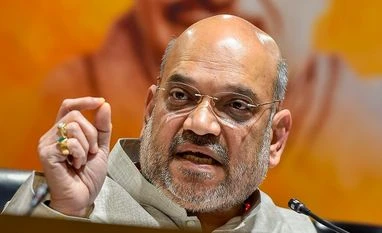
Amit Shah, BJP
Archis Mohan New Delhi
Last Updated : Jul 11 2018 | 4:10 PM IST
Given that there is a stalemate in the Rajya Sabha numbers between a united Opposition and the Bharatiya Janata Party (BJP)-led coalition, the election of the deputy chairman of the House is balanced on a knife’s edge.

The Opposition is looking to Bhubaneswar: It could win the battle if Naveen Patnaik instructs the members of his party, the Biju Janata Dal, to support the Opposition candidate, likely to be Sukhendu Sekhar Roy of the Trinamool Congress.

It is unlikely that the BJP will be able to get others to agree on supporting someone from its ranks. But, now that it is trying to reach out to its miffed allies, the BJP could throw a spanner in the Opposition’s works if it were to field Shiromani Akali Dal MP Naresh Gujral.

While BJP chief Amit Shah needs to be convinced, BJP strategists, particularly Leader of the House Arun Jaitley, know that the vote of Patnaik's party is crucial to the election, and also that Gujral and Patnaik go a long way back.

In the early 1970s, Patnaik and Gujral had got together to run a business at one of New Delhi’s top hotels. Both were then in their mid-20s and sons of prominent politicians. Their fathers were, or had been, extremely close to the Nehru-Gandhis.

Patnaik, the younger of the two sons of legendary Odia leader Biju Patnaik, had even lived at the residence of Jawaharlal Nehru at Teen Murti House. His senior by three years at Doon School was Rajiv Gandhi, and Sanjay Gandhi was his classmate.

Gujral, the elder of the two sons of Inder Kumar Gujral, was a graduate from Delhi’s St Stephen’s College and was looking at a career in chartered accountancy. His uncle Satish Gujral was known to the Nehru-Gandhis and had also painted a portrait of Indira Gandhi. In the 1970s, Inder Kumar Gujral was a member of the inner-circle of then prime minister Indira Gandhi.

The fathers of both Patnaik and Gujral would eventually fall out with Indira Gandhi. Naveen Patnaik, 71, is less than two years older to 70-year-old Gujral. In the early 1970s, the two young men ran a boutique at New Delhi’s Oberoi Hotel. It was called ‘Psyche Delhi’ and dealt with designer wear, Indian handicraft and curios.

But the similarities don’t end just there. Initially, neither of the two men followed their fathers into politics. While Patnaik pursued art and literature, Gujral started a business after acquiring an export house in 1978.

Patnaik had no interest in politics even as father was the leading Opposition politician of the country and chief minister of Odisha. Gujral immersed himself in his business, but helped out his father when he became the prime minister in the United Front government in 1997-98.

Once his father died, Patnaik was forced into politics. Interestingly, it was Inder Kumar Gujral who had got the nearly 50-year-old Patnaik to say yes to politics. Patnaik won the Lok Sabha elections in 1998, was a minister in the Atal Bihari Vajpayee government and has been the chief minister of Odisha since March 2000.

Gujral has been interested in designing of fabrics as well as fashion garments for the international market. A dress designed by him was worn by late Princess Diana of Wales. Honouring his promise to his father, Gujral joined politics after Inder Kumar Gujral retired from active politics. In 2007, Shiromani Akali Dal sent him to the Rajya Sabha and he is currently serving his third term. In the run-up to the 2014 Lok Sabha elections, Gujral had played an important role in reaching out to potential allies for Narendra Modi-led BJP, including the Telugu Desam Party.

Gujral is considered a reasonable man and is respected across the political spectrum. It is likely, say sources in Opposition parties, that Gujral would emerge as a consensus candidate. An election, in that case, could be prevented.

But for that to happen Modi and Shah need to agree to a non-BJP member getting elected as the Rajya Sabha deputy chairman. Would they? 

One subscription. Two world-class reads.

Already subscribed? Log in

Subscribe to read the full story →
*Subscribe to Business Standard digital and get complimentary access to The New York Times

Smart Quarterly

₹900

3 Months

₹300/Month

SAVE 25%

Smart Essential

₹2,700

1 Year

₹225/Month

SAVE 46%
*Complimentary New York Times access for the 2nd year will be given after 12 months

Super Saver

₹3,900

2 Years

₹162/Month

Subscribe

Renews automatically, cancel anytime

Here’s what’s included in our digital subscription plans

Exclusive premium stories online

  • Over 30 premium stories daily, handpicked by our editors

Complimentary Access to The New York Times

  • News, Games, Cooking, Audio, Wirecutter & The Athletic

Business Standard Epaper

  • Digital replica of our daily newspaper — with options to read, save, and share

Curated Newsletters

  • Insights on markets, finance, politics, tech, and more delivered to your inbox

Market Analysis & Investment Insights

  • In-depth market analysis & insights with access to The Smart Investor

Archives

  • Repository of articles and publications dating back to 1997

Ad-free Reading

  • Uninterrupted reading experience with no advertisements

Seamless Access Across All Devices

  • Access Business Standard across devices — mobile, tablet, or PC, via web or app

Next Story




