When the national executive of the Janata Dal (United), or JD(U), met at Bihar Chief Minister Nitish Kumar’s official residence in Patna recently, all eyes were on Prashant Kishor. A few days before that, the poll strategist and party vice-president had been approached by West Bengal Chief Minister Mamata Banerjee to help her party Trinamool Congress defend its turf in the 2021 Assembly election.
The JD(U)’s alliance partner Bharatiya Janata Party (BJP), which is buoyed by its performance in West Bengal in the Lok Sabha election, had not taken to it kindly. Just 24 hours prior to the meeting, Kumar told journalists that Kishor would explain about his new assignment at the national executive meet. To everyone’s surprise, Kishor, or “PK” as he is popularly known, sat by Kumar’s side and was seen smiling and talking to the JD(U) chief. As the meeting progressed, several matters were discussed, but not for once did Kumar ask Kishor for an explanation.
“Please forget and move on. This thing has no connection with the party. Kishor’s activities in West Bengal are not in his capacity as a JD(U) leader,” Kumar told journalists a day later, when they asked about Kishor’s “explanation”.
“Kishor joined the party in September last year and we assigned him an important role. He, however, also heads an organisation that specialises in devising poll strategies. In that capacity, he keeps in touch with several political parties,” Kumar said.
Political analysts feel that the uneasy ties between the JD(U) and the BJP might be the reason for Kumar’s somersault — they think he might use PK to keep the BJP in check.
It’s not the first time since Kishor’s induction into the JD(U) that he has caused a rift between the two allies. In September last year, soon after he joined active politics, the JD(U) and the BJP came face-to-face over student body elections in various universities of the state, especially Patna University. Several BJP leaders accused Kishor of “influencing the election”. Kumar remained silent over the matter, but Kishor was subsequently removed from the seat-sharing negotiating team.
Kishor was largely absent from Bihar in the run-up to the Lok Sabha polls and spent most his time in Andhra Pradesh. And, there he is being now credited with the spectacular victory of Jagan Mohan Reddy’s YSR Congress; it won 151 seats in the 175-member assembly.
After the assembly results in Andhra Pradesh, Kishor is in high demand. Apart from the Trinamool Congress, he is said to be in talks with the Shiv Sena in Maharashtra and the Janata Dal (Secular) in Karnataka.
“We never had any stake in Andhra, but in West Bengal, we are in a direct fight against the Trinamool. Our allies helping our opponents would be against the coalition dharma. Kumar needs to rein in PK,” said a senior BJP leader.
However, the JD (U) is unmoved. “We don’t know the terms of the agreement between his organisation I-PAC and the Trinamool. He joined the JD(U) as an activist and not a strategist. How can we take action against him?” said party General Secretary K C Tyagi.
Many in the party feel that with a brute majority of its own at the Centre, the BJP is now expecting its partners to toe its line. “They (BJP) can’t dictate terms to us. Their leaders like Giriraj Singh can attack us publicly and they expect us to follow the coalition dharma,” said a minister in Kumar’s Cabinet.
With the assembly polls in Bihar 15-16 months away, many in the JD(U) think that Kumar won’t take any harsh decision on PK. “Nitish needs to prove his dominance in the NDA. Kishor is going to play a big role in it,” the minister added.

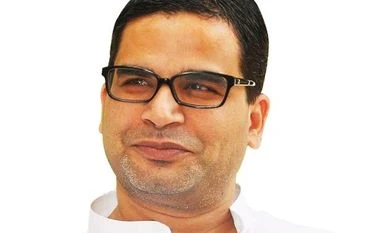 "Strategically controversial: Prashant Kishor in demand after YSR's sweep")












 Connect with us on WhatsApp