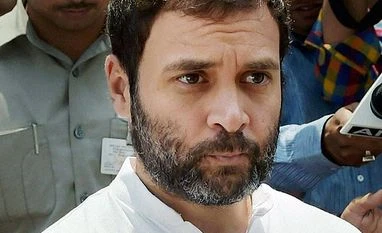
The men who matter in the new team of Rahul Gandhi 2.0
His office and staff have been revamped after the Congress's electoral defeat in 2014
Kavita Chowdhury New Delhi The “coterie” that constituted Rahul Gandhi’s (RG) core team came in for lot of criticism in the wake of the 2014 electoral debacle of the Congress. RG’s office and staff has since undergone a revamp with streamlining and delegation of responsibilities.
From the looks of it, the new dispensation under Rahul Gandhi will be distinct from that of his mother Congress President Sonia Gandhi’s with anyone unlikely to be designated “political Secretary” like Ahmed Patel. Rahul Gandhi reportedly likes to take inputs from “one and all”.
Gandhi continues to believe in “growth with a human face” and while he was at the forefront championing farmer causes – protesting against the NDA land bill he also raised his voice for the middle class woes and dilution of consumer interests in the Real Estate bill as well as joined cause with the youth and Net neutrality. He continues to have around him people who are professionals with a strong connect to the social sector.
While young Congress leaders conspicuously accompany Rahul Gandhi on his recent visits Jyotiraditya Scindia, Jitin Prasada, K Raju, select members of the “old guard” like Ahmed Patel are also keeping abreast with the changed power equations, Patel organized Gandhi’s comeback rally in tandem with Digvijay Singh, who is considered to be close to Gandhi.
Mohan Gopal : Ideologue
The Director of the Rajiv Gandhi Institute for Contemporary Studies (RGICS) which acts as a think tank for the Congress party providing critical research on policy issues. Gopal strongly advocates Adam Smith’s model of free market economy with economic resources allocated through egalitarian means.
Gopal is believed to have considerably influenced Gandhi on policy issues. He has had a long a stint at the World Bank in Washington DC and the Asian Development Bank mainly focussing in the area of development and law. He has served as the former head of the National Judicial Academy, former member of SEBI and former Vice Chancellor of National Law School of India University NLSIU.
Gopal has played instrumental role drafting the UPA’s Food bill and Land bill. Gopal had been appointed special invitee to the Congress’ manifesto committee in the 2014 Lok Sabha polls. Not a newbie to Congress circles, he was the second President of the youth wing NSUI.
K Raju: The bureaucrat turned politician is the head of the party’s Scheduled Castes cell; he has of late been ideating on Gandhi’s programme outreach; emphasizing on Gandhi undertaking a 16 km “padayatra” to connect with farmers in Vidharbha rather than merely visiting the families of those farmers who had committed suicide.
Had accompanied Gandhi to Vidharbha and is supervising the Telangana stretch of Gandhi’s programme to raise the issue of agrarian distress. The 1981 batch IAS officer’s stint as the Additional Secretary of the National Advisory Council (NAC) brought him close to 10, Janpath. He quit the IAS and joined Gandhi, he is considered to be a key asset when deliberating Dalit issues as well. Raju has an MPhil in economic management and policy as well as an MBA.
Kanishk Singh: From having all powers vested in him virtually as chief of staff at 12, Tughlaq Lane, ( Gandhi’s residence cum office) for over a decade, Singh continues to be a key figure in his team but is divested of looking after appointments. In addition to his existing profile in Gandhi’s team he also is managing Priyanka Vadra’s office as well.
Kaushal Vidyarthee: The Oxford University graduate, is a key figure in Gandhi’s office, he is incharge of Rahul Gandhi appointments as well as provides research inputs to Gandhi. His interests range from urban planning to poverty reduction and women’s empowerment. His research interests in social exclusion, Dalit empowerment in the economy make him a valuable asset in the office. Earlier he used to maintain a detailed website vidyarthee.com; nowadays he is more visible on Twitter. He accompanies Gandhi on all his trips.
Alankar Sawai: Another young face in Gandhi’s office. A former banker (he was with ICICI Bank’s credit card division). Along with Vidyarthee he accompanies Rahul Gandhi on every visit and also chips in with research. He was initially incharge of documents and social media in the Rahul team.
Sachin Rao: Manages matters concerning youth organizations of the Congress. He heads the Election Commission which manages the elections of the Youth Congress and the NSUI. Rao has an MBA in corporate strategy and international business from the Michigan Business School but turned his focus towards the social sector and joined the Centre for Civil Society in Delhi when he was spotted by Gandhi.
KB Byju: A former SPG officer, Byju quit his service in 2010 to join team Rahul as an active member. He has an active Twitter handle which lambasts the Narendra Modi led government at every opportunity. From initially supervising Gandhi’s security issues, he now oversees logistics and media.
Randeep Surjewala: A new entrant into Team Rahul; the hands on Communication chief of the party, has streamlined ad- hoc media cell operations even succeeding to get Rahul Gandhi’s office’s media outreach to synergise with the party’s media operations.
But Surjewala the former Youth Congress President and Haryana cabinet minister is more than just the media incharge, his inputs on the agrarian crisis, the double blow dealt by the government’s anti- farmer stance on MSP and land bill, have all been critical in shaping Gandhi’s image as a champion of ruaral and farmer distress. He ensures that Gandhi is prominently projected by the party through all its platforms.
Other men who matter:
Ajay Maken: The former Union minister was appointed Delhi PCC chief by Rahul Gandhi. He was handpicked despite being the bete nopire of former chief minister Sheila Dikshit considered to be close to the Gandhis. Ajay Maken was initially given charge of Media and Communications during 2014 polls as part of the young leaders being promoted by Gandhi. Maken is believed to have prompted Gandhi to take up the issue of Net neutrality which connects with the youth and take up the issue of middle class consumer interests in the Real Estate bill, which NDA has diluted.
Jairam Ramesh: The former Rural Development minister has been a long time close confidant of the Gandhi family and for some time now of Rahul Gandhi. Ramesh has been at the forefront of the agitation against the NDA’s Land bill, leading Congress units from Bihar to Delhi in their protests even when Rahul Gandhi was away on his 56 day sabbatical.
Considered to be the brains behind many a public policy initiative, it was Ramesh who coined the slogan Direct Benefits Transfer slogan, “Aapka Paise Aapke Haath.” Ramesh was even appointed head of the secretariat manning the 2014 Congress Election Coordination committee for which he drew flak when the Congress tanked. In 2009 he was also effectively incharge of the Congress War Room.
Digvijay Singh: The former two time Madhya Pradesh chief minister, clout within Gandhi’s immediate circle appears to have lessened but he is still very much in the loop. He was appointed head of the Organising committee for the crucial Rahul Gandhi comeback Kisaan rally. Not one to keep quiet, he speaks uninhibitedly attacking Narendra Modi, Hindu terror and BJP leaders. He held crucial positions with the party’s electoral set up for 2014, as member of the Election Coordination Committee and incharge of its Media and Publicity wing; another person who came in for lot of criticism.
Sam Pitroda: Known as the man who ushered in the Telecom revolution under the aegis of Rag’s father the late Rajiv Gandhi, Pitroda is a permanent fixture in RG circles rendering crucial advice on using technology to bridge the socio-economic divide and is often invited to train Congressmen on such issues.
Those whose eminence has paled:
Madhusudan Mistry: Blamed by rank and file for “messing up badly” the 2014 selection of candidates, he was deputed with the task of touring the country and selecting candidates. As incharge of Uttar Pradesh, his tenure has been unremarkable.

 "The men who matter in the new team of Rahul Gandhi 2.0")

